

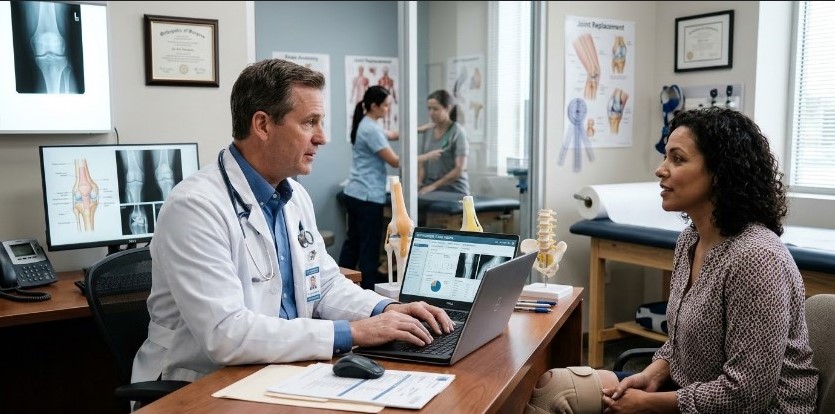
The management of orthopedic practices in the United States is characterized by complex clinical workflows, necessitating the implementation of electronic health record and electronic medical record systems. Orthopedic specialists are tasked with documenting detailed musculoskeletal examinations, tracking imaging results, coordinating surgical workflows, and processing a high volume of insurance claims. Consequently, selecting an appropriate EHR/EMR solution is crucial for optimizing operational efficiency and facilitating high-quality patient care.
Traditional EMR systems often lack the specialized tools orthopedic providers require. An orthopedic EHR system includes features such as musculoskeletal templates, surgical documentation, imaging integrations, implant tracking, and advanced billing workflows tailored to orthopedic procedures. Without these features, clinics may struggle with inefficient charting, coding errors, and delayed reimbursements.
In this guide, we explore the top EHR/EMR systems for orthopedic practices in the USA, highlighting their features, services, and benefits.
Why Orthopedic Practices Need Specialty-Specific EHR/EMR Software?
Orthopedics is documentation-intensive and highly procedural. Your EHR should support:
- Custom musculoskeletal exam templates
- Integrated imaging (X-ray, MRI, CT scan references)
- Surgical scheduling & post-op documentation
- Implant tracking and inventory
- Physical therapy coordination
- Workers’ compensation workflows
- Insurance-heavy billing cycles
- Outcome tracking and reporting
Top EHR/EMR for Orthopedic Practices in the USA
Mantra Practice

Mantra Practice is a cloud-based electronic health records (EHR) platform specifically tailored to meet the needs of specialty practices in the United States, including orthopedic clinics. This system prioritizes simplicity, efficiency, and cost-effectiveness, making it an advantageous solution for orthopedic practices seeking to optimize their digital workflow.
Many orthopedic clinics face difficulties with systems that hinder the efficiency of documentation and billing processes. Mantra Practice overcomes this challenge by offering an intuitive interface and customizable templates tailored to meet the specific requirements of orthopedic providers. The platform supports the comprehensive management of clinical tasks, including musculoskeletal examinations, appointments, and claims, thereby facilitating streamlined operations within clinics.
Key Features:
- Cloud-based orthopedic EHR software
- Customizable musculoskeletal exam templates
- Integrated billing and revenue cycle management
- E-prescribing and medication tracking
- Appointment scheduling and calendar management
- Patient portal for communication and records access
- Insurance claims submission and tracking
- HIPAA-compliant data security
- Multi-provider and multi-location support
Why Choose Mantra Practice?
Mantra Practice is a strong choice for orthopedic practices seeking a modern, easy-to-use EHR system without unnecessary complexity. The platform offers an integrated solution for clinical documentation, billing, and patient engagement. For growing orthopedic clinics within the U.S., Mantra Practice provides the adaptability and scalability required to effectively manage both clinical operational processes and administrative duties.
NextGen Healthcare
NextGen Healthcare is a prominent healthcare technology provider in the United States, renowned for its comprehensive EHR platform. This platform is frequently utilized by large physician groups and multi-location clinics. It is designed to facilitate complex clinical workflows while ensuring adherence to relevant regulatory requirements. The system features customizable templates for orthopedic documentation, advanced reporting tools, and integrated practice management capabilities.
Orthopedic practices utilizing NextGen can derive significant advantages from data-driven insights, enabling the monitoring of patient outcomes, evaluation of operational performance, and enhancement of clinical decision-making processes. Additionally, the platform seamlessly integrates with other healthcare technologies, facilitating interoperability across various systems.
Features:
- Specialty-specific orthopedic EHR templates
- Integrated practice management system
- Advanced reporting and analytics
- Revenue cycle management tools
- Patient engagement solutions
- Interoperability with other healthcare systems
- Telehealth capabilities
Why Choose NextGen Healthcare?
NextGen Healthcare is particularly well-suited for large-scale orthopedic practices and multi-specialty clinics requiring a comprehensive enterprise-level EHR system. Its robust analytics and reporting functionalities enable clinics to track performance metrics and optimize operational workflows across multiple providers and locations.
Praxis EMR

Praxis EMR employs a distinctive approach to electronic medical records, leveraging artificial intelligence-driven documentation. It diverges from traditional template-based systems, instead allowing the system to learn and adapt to the individual provider’s documentation style over time. For orthopedic surgeons who prefer narrative-style documentation, this flexibility can result in substantial improvements to charting efficiency.
It facilitates a range of orthopedic workflows, encompassing surgical documentation, patient consultations, and post-operative care management. The artificial intelligence-driven learning engine enhances efficiency by automating repetitive documentation tasks and optimizes accuracy with continuous improvement.
Features:
- AI-driven clinical documentation
- Adaptive orthopedic workflows
- E-prescribing tools
- Specialty-specific reporting
- Integrated billing options
- Cloud and server deployment options
Why Choose Praxis EMR?
Praxis EMR is particularly suited for orthopedic providers who prefer a highly flexible and intelligent documentation system. Its AI-driven approach enables the platform to adapt to the provider’s workflow, rendering it a potent option for clinicians seeking enhanced efficiency and customization.
ModMed
ModMed provides a specialized EHR platform tailored to the unique needs of orthopedic practices. The system prioritizes structured documentation and evidence-based care, incorporating specialty-specific templates to facilitate musculoskeletal examinations, surgical documentation, and treatment planning.
In addition to documentation tools, ModMed offers sophisticated analytics functionalities, enabling orthopedic clinics to track patient outcomes and operational efficiency. The platform seamlessly integrates with practice management systems, facilitating streamlined scheduling, billing, and patient communication processes.
Services:
- Orthopedic-specific EMR templates
- Structured documentation workflows
- Integrated practice management tools
- Revenue cycle management support
- Patient engagement features
- Data analytics and reporting dashboards
Why Choose ModMed?
ModMed is a suitable option for orthopedic practices seeking a specialized EHR system with a structured framework. Its clinical templates and analytics features enable healthcare providers to maintain comprehensive documentation, monitor outcomes, and enhance overall practice efficiency.
CureMD
CureMD offers a cloud-based EMR and practice management solution specifically designed for orthopedic practices. This integrated platform streamlines clinical and administrative operations by consolidating patient documentation, billing tools, and scheduling features into a unified system. The solution is tailored to meet the unique needs of musculoskeletal care, offering customizable templates for orthopedic clinics. Additionally, the system incorporates built-in revenue cycle management features to minimize claim denials and enhance reimbursement rates.
Due to its cloud-based infrastructure, orthopedic providers utilizing CureMD can remotely access patient records while ensuring adherence to established healthcare data security protocols. This flexibility is particularly advantageous for clinics with multiple locations or a dispersed provider network.
Services:
- Cloud-based orthopedic EMR system
- Customizable musculoskeletal templates
- Practice management software
- Revenue cycle management tools
- Patient portal and communication tools
- E-prescribing functionality
- Compliance and reporting features
Why Choose CureMD?
CureMD presents a reliable alternative for orthopedic practices seeking a cost-effective and comprehensive EHR system. Its integrated billing functionalities and customizable template capabilities facilitate the efficient management of both clinical documentation and administrative tasks.
How to Choose the Best Orthopedic EHR Software in the USA?
When evaluating orthopedic EMR platforms, consider the following factors:
- Specialty-specific musculoskeletal templates
- Surgical workflow and procedure documentation
- Imaging and PACS integration
- Billing and revenue cycle management tools
- Ease of use and provider adoption
- Cloud accessibility and security
- Scalability for growing practices
- Customer support and training
| EHR / EMR | Best For | Key Strength | Billing | Cloud |
|---|---|---|---|---|
| Mantra Practice | Orthopedic clinics | Simple & customizable | Built-in RCM | ✅ |
| NextGen Healthcare | Large practices | Advanced analytics | Integrated | ✅ |
| Praxis EMR | Surgeons | AI charting | Optional | ✅ |
| ModMed | Structured workflows | Ortho templates | Integrated | ✅ |
| CureMD | Budget practices | Billing + PM tools | Strong RCM | ✅ |
Conclusion
The healthcare industry continues to evolve rapidly, and orthopedic practices must adopt advanced technology to remain competitive and efficient. A well-designed orthopedic EHR/EMR system can facilitate the efficient documentation of patient data, simplify billing procedures, enhance patient engagement, and ultimately contribute to improved clinical outcomes.
While several platforms offer strong features, selecting the ideal system ultimately depends on the size of your practice, workflow preferences, and budget. Healthcare clinics should thoroughly assess key features, including musculoskeletal templates, imaging integration, revenue cycle management, and usability.
Mantra Practice offers a modern, intuitive platform with cloud-based architecture, integrated billing tools, and customizable workflows, making it a practical choice for orthopedic clinics seeking improved efficiency and patient care.
Frequently Asked Questions
Orthopedic EHR systems should incorporate comprehensive templates for musculoskeletal examinations, seamless integration with imaging modalities, specialized documentation tools for surgical procedures, implant tracking functionality, automated billing mechanisms, and patient engagement capabilities.
Specialty-specific EHR systems provide tailored support for orthopedic workflows, encompassing fracture documentation, surgical procedures, imaging reviews, and therapy coordination, functionalities that may not be efficiently managed by generic EHR systems.
Yes, many orthopedic EMR platforms integrate with PACS systems for direct EHR access to imaging studies like X-rays, MRIs, and CT scans.
Orthopedic electronic health record (EHR) systems automate coding recommendations, enhance the efficiency of claims submission, and minimize the occurrence of billing errors, thereby facilitating improved reimbursement rates and reduced claim denials for clinics.
Cloud-based EHR systems offer flexibility, remote access, automatic updates, and lower upfront costs, making them a popular choice for modern orthopedic practices.