

Employee health has become one of the biggest drivers of workplace productivity and healthcare costs. As chronic diseases continue to rise, employers are facing increasing financial pressure from absenteeism, presenteeism, and escalating medical expenses.
More than half of U.S. employees-58%-live with at least one chronic physical health condition, according to a 2024 national poll by Harvard T.H. Chan School of Public Health and the de Beaumont Foundation. Diabetes, hypertension, heart disease, obesity, and asthma top the list.
Yet most employers don’t know the full extent of the problem. A majority of affected employees-60%-have not formally disclosed their conditions to their employer. They worry about stigma. They fear being passed over. As a result, many quietly manage symptoms, postpone medical appointments, and continue working at reduced capacity.
This is where chronic disease management programs for employees come in. They are no longer a nice-to-have; they are a strategic investment that helps organizations control healthcare costs, improve workforce productivity, and support employee wellbeing.
The Cost of Ignoring Chronic Disease at Work
Chronic conditions don’t just affect individuals. They hit employers hard – in measurable, avoidable ways.
According to the CDC, chronic diseases account for nearly 90% of the nation’s $4.1 trillion in annual healthcare expenditures. For employers, the impact goes beyond healthcare claims. Research has estimated that employers lose an average of $2,945 per employee each year to absenteeism and presenteeism associated with chronic health conditions.
Research from the Integrated Benefits Institute has estimated that poor health accounts for approximately 540 million lost workdays annually through presenteeism, or reduced productivity while employees are at work.
Three-quarters of employees with chronic conditions – 76% – say they need to actively manage their health during work hours. More than a third have skipped or delayed medical appointments to avoid disrupting their work schedule. That deferred care leads to worsening conditions, more expensive interventions, and higher employer healthcare costs down the line.
According to EBRI’s 2025 analysis of 13.1 million commercially insured employees, 61% had at least one chronic condition, and that group accounted for 92% of all healthcare spending. The top cost drivers were respiratory disease, heart disease, and musculoskeletal disorders.
Chronic disease contributes substantially to employer absenteeism and productivity losses. Diabetes also carries a significant economic burden. One recent employer-focused analysis estimated the annual cost of diabetes to U.S. employers at approximately $245 billion when direct and indirect costs are considered.
The math is clear. Inaction is expensive.
The solution isn’t simply spending more on healthcare – it’s investing in structured programs that help employees manage chronic conditions before they become costly crises.
What Are Chronic Disease Management Programs for Employees?
Chronic disease management programs for employees are structured, employer-sponsored initiatives that help workers prevent, monitor, and manage long-term health conditions. These programs go beyond annual health check-ups. They offer sustained, personalized support through a combination of clinical care, behavioral coaching, digital tools, and lifestyle interventions.
Conditions typically addressed include:
- Type 2 diabetes
- Hypertension and cardiovascular disease
- Obesity and metabolic syndrome
- Asthma and COPD
- Musculoskeletal disorders
- Cancer (prevention and care navigation)
- Mental health conditions co-occurring with physical illness
These programs are usually delivered through health plan partners, third-party wellness vendors, or specialized digital health platforms integrated into existing employee health programs.
Key Benefits of Chronic Disease Management Programs
For employers, the value extends far beyond better health. Effective chronic disease management programs generate measurable financial, operational, and workforce benefits.
1. Reduced Healthcare Costs
A meta-analysis published in Health Affairs found that every dollar invested in workplace wellness programs was associated with approximately $3.27 in lower medical costs and $2.73 in lower absenteeism costs.
2. Improved Productivity and Presenteeism
Unmanaged chronic conditions don’t just cause absences. They reduce the quality of work done in the office. When employees receive adequate support – coaching, medication reminders, regular monitoring – they perform better on the job.
3. Lower Absenteeism
Employees with well-managed conditions may experience fewer disruptions to work and fewer avoidable healthcare complications. Structured chronic disease management can help interrupt this cycle by supporting earlier intervention, treatment adherence, and ongoing condition management.
4. Better Employee Wellbeing and Retention
Investing in employee wellbeing sends a strong signal. Employees who feel supported are more engaged and less likely to leave. In competitive hiring markets, a robust workplace wellness program is a meaningful differentiator.
5. Stronger Benefits ROI
The share of respondents reporting increased investment in disease management programs rose from 36% in 2023 to 48% in 2024 – a 12-percentage-point increase – as employers focused on managing healthcare costs and preventing complications from chronic diseases such as diabetes.
Core Strategies for Effective Chronic Disease Management
“Managing a chronic disease isn’t about perfection – it’s about making consistent choices that lead to better health every day.”
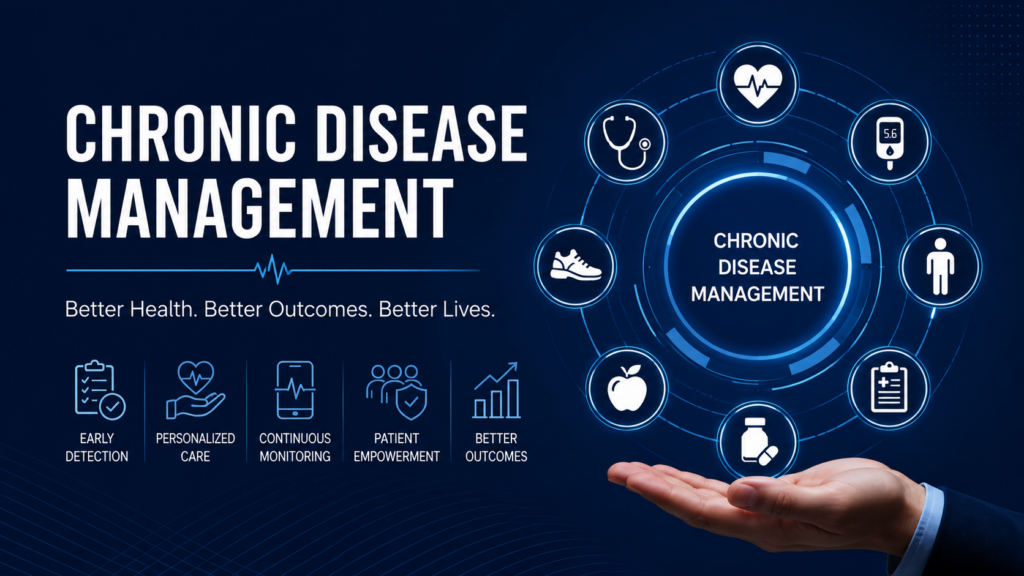
Effective chronic disease management combines proactive healthcare, healthy lifestyle habits, and ongoing patient engagement to improve long-term outcomes and enhance quality of life.
Identify the High-Risk Population First
Not all employees carry the same health risk. Broad wellness initiatives can support the wider workforce, but employees with established chronic conditions often need more targeted interventions. These may include sustained behaviour change support, medication adherence assistance, clinical monitoring, and condition-specific coaching.
Use health risk assessments (HRAs), biometric screening data, and claims analysis to identify who needs intervention most. Population stratification is the foundation of any effective chronic disease management strategy.
Address Multiple Behaviors Simultaneously
A 2024 meta-analysis in the Annals of Behavioral Medicine, covering 61 randomized controlled trials, found that interventions targeting multiple health behaviors can improve several behaviors among people living with chronic conditions. The strongest interventions addressed areas such as physical activity, diet, medication adherence, and tobacco use.
Single-focus programs may address only one part of the complex factors affecting chronic conditions. Combining multiple relevant behaviors can provide more comprehensive support.
Combine Human Coaching with Digital Tools
Technology alone is not enough. A 2025 systematic review in Frontiers in Digital Health found that human, AI, and hybrid coaching models can support engagement in digital health interventions. Human-supported approaches generally showed stronger satisfaction and connection, suggesting that digital tools may work best when combined with appropriate human support.
Effective corporate wellness programs can pair digital platforms with human health coaches, care managers, and nurse practitioners who build trust and accountability over time.
Design for Long-Term Engagement
Some research suggests that meaningful health and financial outcomes may take several years of sustained participation to emerge. This highlights the importance of designing chronic disease management programs for long-term engagement rather than short-term participation.
Short bursts of wellness activity produce short-term enthusiasm. Durable health change – and cost savings – require consistent, multi-year engagement strategies.
Create a Supportive Workplace Culture
Many employees hide their conditions due to stigma and privacy concerns. A majority of employees with chronic conditions – 60% – have not formally told their employer. Top reasons include self-reliance and privacy, with notable shares worrying about stigma or being passed over for opportunities.
Employers can address this by normalizing conversations about health, training managers to offer accommodations without judgment, and communicating clearly that participation in health programs is confidential.
Integrate Telehealth and Remote Support
Telehealth can remove access barriers, particularly for employees in remote locations or those who cannot easily take time away from work for in-person appointments. Integrating virtual consultations, remote monitoring, and digital follow-ups can make chronic disease management more accessible.
Use Incentives Strategically
Participation-based incentives can encourage employees to complete health risk assessments, schedule preventive care, or engage with chronic condition management programs. Employers should design incentives carefully so that they encourage healthy actions without unfairly penalizing employees based on health outcomes they may not be able to control.
Incentives work best when they reward action, not health outcomes, to avoid penalizing employees whose conditions are harder to control, regardless of effort.
What Conditions Should Employers Prioritize?
Not all chronic conditions carry the same organizational impact. Employers with limited budgets should prioritize based on claims data and prevalence.
Diabetes is among the most costly and manageable chronic conditions. Digital diabetes management platforms can offer real-time insights, medication tracking, and personalized coaching to support disease management and reduce the risk of complications.
Cardiovascular disease is a major driver of healthcare spending across many employer populations. Employers increasingly identify cardiovascular conditions alongside cancer and musculoskeletal disorders as important areas for cost management and chronic disease intervention.
Obesity is both a chronic condition and a major risk factor for diabetes, cardiovascular disease, and musculoskeletal problems. As obesity rates and treatment costs continue to affect employer health plans, weight management has become an increasingly important component of chronic disease strategies.
Mental health conditions often co-occur with physical chronic illness, compounding their impact. Depression, anxiety, and chronic pain frequently intersect. Effective employee wellness programs address this intersection rather than siloing mental and physical health support.
| Without Disease Management | With Disease Management |
|---|---|
| Higher absenteeism | Lower absenteeism |
| Higher healthcare costs | Lower healthcare costs |
| Poor medication adherence | Better adherence |
| Delayed treatment | Early intervention |
| Lower productivity | Improved productivity |
How to Build a Chronic Disease Management Program: A Step-by-Step Framework
A successful chronic disease management program needs more than a wellness initiative. Employers should follow a structured approach that identifies workforce needs, sets measurable goals, and supports long-term engagement.
Step 1 – Assess Your Workforce
Conduct anonymous health risk assessments. Analyze claims data. Understand the top conditions affecting your employees and the costs they generate.
Step 2 – Define Goals
Set measurable targets: reduce hospitalizations by X%, improve HbA1c levels in diabetic employees, and lower absenteeism by a specific percentage within 12 months.
Step 3 – Choose the Right Vendor or Program
Evaluate vendors on population stratification capability, human coaching integration, evidence base, and long-term engagement data. Avoid programs built only for low-risk populations.
Step 4 – Integrate With Existing Benefits
Embed chronic disease management within your existing health plan, EAP, and employee health programs. Fragmented offerings reduce utilization.
Step 5 – Communicate Clearly and Confidentially
Launch with transparent employee communication. Emphasize confidentiality. Use multiple channels – email, manager briefings, benefits fairs – to drive awareness.
Step 6 – Measure and Iterate
Track participation, clinical outcomes, and cost metrics. Review annually. Adjust program design based on what the data shows.
Legal and Ethical Considerations
Chronic disease management programs for employees may be subject to requirements under laws such as the Americans with Disabilities Act (ADA), the Health Insurance Portability and Accountability Act (HIPAA), and the Genetic Information Nondiscrimination Act (GINA).
Key principles to follow:
- Health data collected through screenings or HRAs must remain confidential.
- Incentive programs must not penalize employees who cannot meet medical thresholds due to their conditions.
- Reasonable accommodations must be offered to employees managing chronic conditions, including flexible scheduling and modified duties.
- Participation in employee wellness programs should be voluntary, not coercive.
- Workers who can balance their work and health responsibilities through flexible policies may experience better job satisfaction, while employers can benefit from improved productivity and retention.
Emerging Trends in Workplace Chronic Disease Management
Workplace chronic disease management is evolving through AI-driven health monitoring, personalized workplace wellness programs, and digital care solutions that promote healthier, more productive employees.
AI-Assisted Health Coaching
Artificial intelligence is being used to personalize outreach, predict high-risk individuals before costly claims occur, and automate medication adherence reminders. Used in support of human coaches, AI improves program efficiency without sacrificing the human connection that drives long-term engagement.
GLP-1 Medication Management
The use of GLP-1 drugs, primarily for treating obesity and type 2 diabetes, is expected to rise significantly. In 2024, 79% of employers reported heightened interest in these medications among covered members, while 96% expressed concern about their long-term cost implications. Employers are increasingly pairing GLP-1 coverage with behavioral support programs to improve clinical outcomes and manage long-term costs.
Health Equity Focus
Employers are increasingly focusing on health equity by addressing affordability, access, women’s health, disability, neurodiversity, and the healthcare needs of underserved employee groups. Effective corporate wellness programs acknowledge that chronic disease risk is not equally distributed across racial, socioeconomic, or geographic lines.
Value-Based Care Integration
Employers are shifting from fee-for-service models to outcome-based reimbursement, incentivizing providers to deliver better chronic disease outcomes rather than simply higher volumes of care.
Wearable Health Monitoring
Many employers now integrate smartwatches and connected devices to monitor activity levels, sleep patterns, heart rate, and other health metrics, enabling earlier interventions and more personalized chronic disease management.
Why Employers Cannot Afford to Wait
Healthcare costs are expected to grow at the highest rate in a decade – nearly 8% for 2025 – according to the Business Group on Health’s 2025 Employer Health Care Strategy Survey.
Chronic disease could contribute to approximately $794 billion in annual lost employee productivity by 2030 if current trends continue.
The trajectory is clear. Without proactive chronic disease management programs for employees, employer health costs will continue to climb. With them, employers can intervene early, reduce high-cost events, improve workforce productivity, and build a culture where employee health is genuinely supported – not quietly ignored.
The healthiest workplaces are not the ones that avoid the conversation. They are the ones that build systems to support employees through it.
Conclusion
Well-designed chronic disease management programs can be a valuable investment for employers, particularly when they target high-risk populations and combine clinical support with sustained employee engagement. They reduce direct healthcare spending, lower absenteeism and improve presenteeism. And they build the kind of employee wellbeing culture that attracts and retains talent in a competitive market.
The evidence points to a clear opportunity. When programs are well designed, appropriately targeted, and sustained over time, they can support better health outcomes while helping employers manage healthcare and productivity costs. And the human case – for employees managing diabetes, hypertension, or heart disease while meeting deadlines – is even more so.
Organizations that invest in proactive chronic disease management today will be better positioned to control healthcare costs, retain top talent, and build a healthier, more resilient workforce tomorrow.
Ready to build a healthier, more productive workforce? Partner with an experienced employee wellness provider to design a chronic disease management programme tailored to your workforce. The right approach can help employees manage their health while giving employers measurable outcomes to track over time.
Frequently Asked Questions
A general employee wellness program targets the broad workforce – promoting fitness, nutrition, and mental health for all employees. A chronic disease management program is targeted. It focuses on the subset of employees with existing or high-risk conditions who may account for a significant share of healthcare costs. Both are valuable, but targeted disease management programs may offer stronger financial value when they effectively support employees with high-cost or high-risk chronic conditions.
Some improvements in engagement, self-management, and employee experience may appear within months. Clinical and financial outcomes can take longer and vary by condition, programme design, participation levels, and the population being served. Employers should therefore evaluate programs using both short-term engagement measures and longer-term clinical and financial outcomes.
Yes. Smaller employers can implement disease management programs, particularly through health plans, benefits providers, and specialized vendors that offer scalable solutions. Preventing even one high-cost event – like a hospitalization – may have a meaningful impact on a smaller employer’s overall healthcare spending. Many vendors offer scalable solutions suitable for companies with 50 to 500 employees.