

Every healthy workplace starts with the right data. Employee health risk assessment tools give HR leaders exactly that – a clear, evidence-based picture of workforce health. They can help identify risks early, support cost management, and inform smarter wellness decisions.
Without accurate health data, wellness programs are built on assumptions. And assumptions are expensive. The right tool collects the right information, surfaces meaningful patterns, and helps identify where resources may have the greatest potential impact.
This guide covers what these tools do, why they matter, how to choose the right one, and how leading organizations use them to build healthier, more productive workforces.
What Are Employee Health Risk Assessment Tools?
Employee health risk assessment tools are digital platforms or structured questionnaires that evaluate the physical, mental, and behavioral health of your workforce. They are also known as Health Risk Appraisals (HRAs) or health risk appraisal tools.
Think of them as a diagnostic baseline. Before you can treat a problem, you need to understand it. HRAs give HR teams and health professionals a structured way to do exactly that – at both the individual and population level.
They collect data on:
- Lifestyle habits (exercise frequency, diet quality, sleep duration, smoking, alcohol consumption)
- Medical history and family health background
- Stress levels, anxiety, burnout indicators, and mental health status
- Chronic disease risk factors (blood pressure, cholesterol, blood sugar levels)
- Workplace ergonomic and safety exposures
- Financial health and social well-being (on more advanced platforms)
The output is a health risk profile. Individuals receive a personalized snapshot of their current health and areas of concern. HR teams receive anonymized, aggregate data showing the health trends and risk concentration across the workforce.
This data becomes the engine for targeted employee wellness programs – programs that address real needs rather than generic assumptions.
The best tools also track change over time. Running the same assessment annually shows whether health risks are increasing, decreasing, or shifting across the organization. That longitudinal view is what makes HRAs genuinely powerful.
Why Employers Need These Tools in 2026
Workforce health directly affects business performance. The numbers are stark.
- Depression and anxiety cost the global economy $1 trillion in lost productivity every year, according to the WHO.
- A Headspace study found that 58% of employees have considered leaving their jobs due to mental health challenges.
- The same study found that 71% of employees regularly work beyond their expected hours, leading to sleep disturbances for 92% of workers.
- Research shows that 87% of workers consider health and wellness offerings when choosing an employer.
- The U.S. spends approximately $4.1 trillion annually in healthcare costs, according to the CDC.
These aren’t abstract figures. They represent lost output, higher turnover, rising insurance premiums, and an increasingly disengaged workforce.
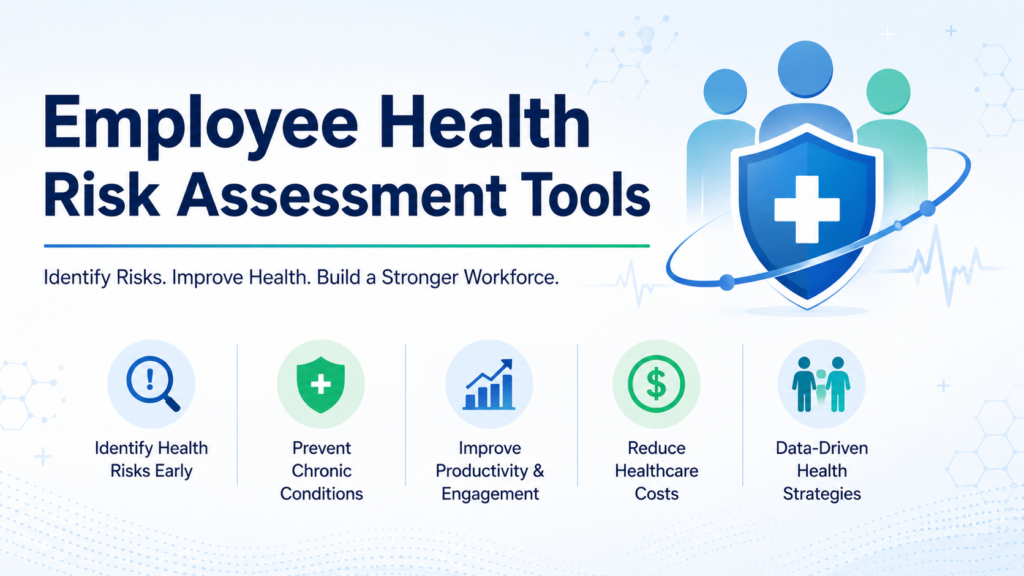
Employee health risk assessment tools help organizations get ahead of these challenges. They shift the approach from reactive to preventive by helping employers identify health risks earlier and connect employees with appropriate support.
The business case is equally strong on the financial side. Research cited by Talkspace has reported that some employee wellness programs can generate substantial healthcare cost savings relative to program investment. Health risk assessments held a 21.48% market share within the corporate wellness segment in 2024, reflecting how central they have become.
Meanwhile, the broader corporate wellness market is projected to surpass $130 billion globally – driven largely by growing recognition that employee health is a strategic business input, not a peripheral benefit.
Organizations that implement HRAs also gain a talent acquisition advantage. When candidates evaluate two comparable offers, a company with visible, structured health investment stands apart. That differentiation compounds: healthier employees stay longer, refer better candidates, and create the kind of culture that sustains retention over time.
Key Features to Look for in Employee Health Risk Assessment Tools
Not every tool is built the same. Quality varies widely across platforms. When evaluating options, prioritize these capabilities.
1. Comprehensive Health Scope
Good employee health risk assessment tools cover physical, mental, emotional, and lifestyle dimensions. A narrow focus misses critical risk factors. A platform that only captures BMI and blood pressure will miss the burnout that’s driving your highest-performing team members toward the exit. Look for tools that explicitly include mental health, stress, sleep quality, and financial wellness alongside clinical markers.
2. HIPAA and GDPR Compliance
Data privacy is non-negotiable. The platform must use encrypted storage, anonymized aggregate reporting, and align with regional regulations – HIPAA in the U.S., GDPR in the EU, and relevant local frameworks elsewhere. Employees won’t participate if they don’t trust the process. Data breaches or concerns about misuse can undermine program credibility and employee participation.
3. Integration with Wellness Programs
The tool should connect directly to your broader corporate wellness programs – not sit in isolation. Standalone assessments produce data. Integrated platforms produce behavior change. Look for native integrations with coaching platforms, EAP providers, fitness tracking apps, mental health tools, and benefits management systems. The more seamlessly HRA data flows into interventions, the more impact you’ll see.
4. Biometric Screening Support
Strong platforms pair questionnaire data with biometric inputs – blood pressure, BMI, cholesterol, blood glucose, and resting heart rate. Self-reported data is valuable, but it has known limitations. People underreport unhealthy behaviors and overestimate healthy ones. Biometric data adds clinical objectivity. Combining self-reported information with available biometric data can provide a more comprehensive view of employee health risks.
5. Personalized Feedback and Recommendations
Employees should receive individualized results immediately after completing the assessment. Generic feedback reduces engagement dramatically. The best platforms generate a personal health score, identify specific risk areas, and recommend actionable next steps tailored to the individual – whether that’s a smoking cessation program, a mental health resource, or a nutritional coaching session. Personalized recommendations can make health guidance more relevant and actionable for employees.
6. Aggregate Analytics for HR
HR teams need anonymized, population-level dashboards – not just individual data points. These dashboards show where risk is concentrated across departments, age groups, job functions, or locations. That segmentation allows HR to design targeted interventions rather than blanket programs. The best platforms also allow benchmarking against industry norms and tracking year-over-year trends.
7. Ease of Use and Mobile Accessibility
Any tool that is complex, slow, or desktop-only will see low participation. Long or difficult-to-navigate assessments may discourage participation. Look for mobile-friendly platforms with a simple user experience. Look for mobile-first platforms, clean UX, and multilingual support if your workforce is globally distributed. The best technology is invisible – employees focus on their health, not the tool.
8. Gamification and Engagement Features
Participation rates are the foundation of any HRA program. Without strong completion rates, your data is unrepresentative, and your insights are skewed. Gamification features – such as challenges, leaderboards, reward points, and badges – can encourage participation and engagement when they are appropriate for the workforce. Behavioral and incentive-based approaches have been studied as ways to increase HRA participation, although results can vary significantly by program design and workforce.
9. Coaching and Follow-Up Capabilities
Assessment without coaching is incomplete. Look for platforms that connect employees with health coaches who can interpret HRA results, set goals, and provide accountability over time. Wellness360, MantraCare, and Sprout all offer integrated coaching alongside HRA data – and coaching can extend the value of an assessment by helping employees interpret results, set goals, and receive ongoing support.
10. Scalability and Vendor Support
Your workforce will grow. Your platform needs to grow with it. Evaluate pricing models, customer support quality, implementation timelines, and the vendor’s ability to support global or multi-site deployments. A platform that works perfectly for 200 employees but breaks at 2,000 is not a long-term solution.
Types of Employee Health Risk Assessments
Employee health risk assessment tools are not one-size-fits-all. Different assessment types serve different purposes. Understanding the landscape helps you choose the right approach – or combine multiple types for a more complete picture.
Comprehensive HRAs
These evaluate all health dimensions – lifestyle, medical history, mental health, biometric markers, and social determinants of health. They provide a broad view of employee health and can be useful for organizations seeking a comprehensive population health picture. They typically take 15–20 minutes and produce the most actionable data for program design.
Condition-Specific HRAs
These focus on a single risk area – cardiovascular disease, diabetes, musculoskeletal conditions, or respiratory health. They are particularly useful for high-risk workforce segments: heavy manufacturing workers, drivers, healthcare staff, or aging employee populations where specific conditions are statistically prevalent. They run faster than comprehensive assessments and produce highly targeted data.
Lifestyle HRAs
These assess behavioral risk factors: diet quality, physical activity levels, sleep patterns, alcohol consumption, and smoking status. They are often used as entry points into broader employee wellness programs because they feel less clinical and more accessible to employees who may be hesitant about sharing medical information. They build participation habits that support deeper assessments later.
Mental Health Screenings
These identify stress, anxiety, burnout, and depression risk across the workforce. Given the growing impact of mental health on employee wellbeing and workplace performance, standalone mental health assessments can be useful for organizations seeking to understand workforce-level trends. They allow HR teams to see workforce mental health trends without the complexity of full clinical HRAs.
Workplace Health Assessments
These evaluate occupational risk factors specific to job roles and work environments: ergonomic risks, exposure to physical demands, psychosocial hazards (workload imbalance, low autonomy, role conflict), and safety risks. A workplace health assessment of this type is especially important in industries with high physical demands or complex shift structures.
Pulse Surveys and Continuous Check-Ins
These are lightweight, high-frequency assessments – often 3–5 questions sent weekly or monthly. They don’t replace annual HRAs but complement them. They capture real-time shifts in workforce mood, stress, and engagement that an annual snapshot would miss entirely. Used alongside annual assessments, they give HR teams a dynamic, current view of workforce health.
Best Employee Health Risk Assessment Tools in 2026
Choosing the right employee health risk assessment tool can help employers identify workforce health risks and design targeted wellness strategies. Here are some leading options to consider in 2026.
| Employee Health Risk Assessment Tool | Best For | Key Strength | HRA & Health Data Capabilities |
|---|---|---|---|
| MantraCare | Integrated employee wellness | HRA, mental health, EAP and chronic condition support | Health assessments, risk identification, personalised support |
| CoreHealth Checkpoint | Large enterprises | Configurable assessments and analytics | Custom questionnaires, population dashboards, biometric data integration |
| Sprout (TELUS Health) | Continuous health monitoring | Ongoing risk assessment and behavioural support | Continuous health tracking, behavioural data and risk monitoring |
| Wellsource | Evidence-based assessments | Long-standing HRA expertise | Lifestyle, biometric, medical history, stress and risk assessment |
| MediKeeper | Regulated industries | Security and customisation | Customisable HRA, wellness portal and population risk reporting |
1. MantraCare
MantraCare provides a comprehensive corporate wellness platform built for the full health spectrum – physical, mental, and emotional. Its health screening capabilities for employees integrate clinical-grade HRAs with mental health support, therapy access, Employee Assistance Program (EAP) services, and chronic condition management tools.
What sets MantraCare apart is its depth on the mental health side. Employees who complete an HRA and show elevated stress or burnout risk can be immediately connected to licensed therapists, coaches, or EAP counselors within the same platform – removing the friction that typically prevents high-risk individuals from seeking support.
MantraCare serves organizations across multiple geographies with compliance frameworks adapted to local markets. Its platform scales from small teams to large enterprise deployments.
Best for: Organizations seeking an integrated solution that bridges clinical health assessment with immediate mental health intervention and EAP support.
2. CoreHealth Checkpoint
CoreHealth is a total well-being technology company trusted by global organizations to power health programs for over 3.5 million employees worldwide. Its dedicated HRA module, CoreHealth Checkpoint, is configurable, HIPAA-compliant, and integrates seamlessly with its broader wellness analytics platform.
HR teams can customize questionnaires, set assessment schedules, and access real-time population dashboards. Individual employees receive personalized health scores and recommended actions. Aggregate employer data is fully anonymized. CoreHealth’s platform also supports health screening for employees through biometric data integration, connecting HRA responses with clinical measurement data for richer risk profiles.
CoreHealth is particularly strong for multinational organizations that need a consistent assessment framework across diverse geographies and regulatory environments.
Best for: Large enterprises needing configurable, data-rich assessments with deep analytics.
3. Sprout (TELUS Health)
Sprout was built using machine learning and cognitive behavioral science. Acquired by TELUS Health in 2022, it operates as part of a broader ecosystem that includes virtual care and mental health services – giving it a clinical depth few pure-play wellness platforms can match.
Its proprietary Sprout Health Engine delivers real-time, continuous health risk assessments. Rather than a once-a-year snapshot, Sprout monitors employee health dynamically – updating risk profiles as employees log activity, nutrition, sleep, and biometric data. This ongoing approach is significantly more sensitive to emerging risk than annual HRAs.
Sprout incorporates behavioral tracking and intervention features designed to support healthier behaviors and diabetes prevention. Its gamification layer – dynamic goals, challenges, leaderboards, and rewards – drives participation well beyond initial onboarding.
Best for: Organizations that want ongoing risk monitoring and clinically validated behavior change programs.
4. Wellsource
Wellsource has been a dedicated HRA provider for nearly 40 years – longer than most competitors have existed. Its evidence-based questionnaires are built on clinical research and updated regularly to reflect current public health science.
Its flagship product, Well Being Index, is used by health plans, employers, and wellness vendors. The platform covers lifestyle behaviors, biometric risk, medical history, stress, and safety factors. It produces detailed individual reports and population risk stratification that HR teams can use to allocate wellness resources with precision.
Wellsource’s longevity in the market is itself a credential – its methodology has been tested, refined, and validated across millions of assessments over decades.
Best for: Organizations prioritizing clinical credibility, evidence-based methodology, and long-standing validation.
5. MediKeeper
MediKeeper is a technology company that designs customizable wellness portals for employers, benefits providers, and health plans. Its HRA was developed and maintained in-house, grounded in the latest evidence-based clinical data.
It holds HITRUST CSF Certified status – the most widely adopted security framework in U.S. healthcare. For organizations in regulated industries (healthcare, financial services, government contractors), this certification is often a procurement requirement.
MediKeeper’s portal design allows employers to brand and configure the HRA experience extensively. Employees see a familiar, company-aligned interface. HR teams access centralized dashboards with trend data and population risk segmentation.
Best for: Regulated industries where security certification and customization are procurement requirements.
Conclusion
Employee health risk assessment tools are becoming an increasingly useful component of employer wellness and population health strategies. They are foundational to any serious wellness strategy – and increasingly central to talent strategy, healthcare cost management, and organizational resilience.
These tools can support healthcare cost management, strengthen employee wellbeing and retention, and help identify mental health and chronic disease risks before they become more serious. They also give HR leaders valuable workforce-level insights to design wellness programs around the health needs of their employees.
The right tool, implemented thoughtfully, can shift your entire workforce from reactive healthcare to proactive health management. That shift is not a one-quarter win. It is a compounding advantage – one that builds stronger, more engaged, more productive teams year over year.
Start with a clear goal. Choose a HIPAA-compliant platform that integrates with your existing ecosystem. Communicate transparently. Incentivize participation meaningfully. Act visibly on what you learn. And measure long enough to see the real results.
Your workforce’s health is your organization’s most important asset. The organizations that treat it that way – with data, intention, and genuine commitment – are the ones that will outperform their competitors for the next decade.
Start building that foundation today.
Frequently Asked Questions
Employee health risk assessments are not generally a universal legal requirement. Whether an assessment is required or subject to specific rules depends on the country, industry, workplace, and purpose of the assessment. When implemented, employers should assess which privacy, employment, health-information, and data-protection requirements apply to the program and its data flows, including HIPAA or GDPR where applicable. In some industries, occupational health regulations may require specific types of health screening.
Many employers use annual assessments as a baseline, while the appropriate frequency depends on program goals, workforce needs, and the assessment design. Some platforms, like Sprout (TELUS Health), offer continuous monitoring that updates health risk profiles in real time. Some organizations may use interim check-ins as part of an active wellness program. Complement annual HRAs with shorter quarterly pulse surveys for a more dynamic view.
Transparent communication, visible leadership endorsement, and meaningful participation incentives are the most effective drivers. Participation incentives – such as wellness credits, gift cards, or other permitted rewards – may increase HRA completion rates when they are appropriately designed and communicated. Employees may be more willing to participate when employers clearly explain how their information will be collected, protected, used, and reported, and how the resulting insights will inform workplace health initiatives.