

The technology industry depends on people who solve complex problems, adapt quickly, and work in environments that can change rapidly. These demands can create ongoing pressure for employees across engineering, product, data, cybersecurity, and other technical roles.
Workplace stress in technology can arise from a combination of professional and personal factors. Rapid technological change, evolving skills requirements, distributed work, high workloads, and organizational uncertainty may all contribute to employee wellbeing challenges.
An EAP for tech companies can provide employees with confidential access to professional support and practical resources. This guide explains how these programs can support technology workforces, what services organizations may consider, and how to select and implement an EAP that aligns with employee needs.
Why Workplace Stress in Tech Requires Attention
Technology employees often work in fast-moving environments where priorities, tools, and business requirements can change quickly. The pressures employees experience will vary by role and organization, but several workplace factors may contribute to ongoing stress.
- Always-on expectations. Digital communication can make it difficult for some employees to establish clear boundaries between work and personal time.
- Rapid technological change. New technologies, including AI, can create uncertainty about changing skills requirements, job responsibilities, and long-term career development.
- High workloads and competing priorities. Tight deadlines, complex projects, and frequent changes in priorities can place additional pressure on employees.
- Meeting and communication demands. Employees may spend significant time managing meetings, messages, and other forms of workplace communication alongside focused technical work.
- Organizational uncertainty. Restructuring, changing business priorities, and concerns about job security can affect employee wellbeing.
These challenges are not unique to every technology employee or organization. However, employers should consider how the specific conditions within their workplace may affect employee well-being and access to support.
What Is an EAP for Tech Companies?
An employee assistance program is an employer-sponsored benefit that can provide confidential access to professional support for personal and work-related challenges. Available services vary by provider and program but may include counseling, financial guidance, legal consultations, crisis resources, and other forms of support.
For technology companies, organizations may consider whether an EAP aligns with the working patterns and needs of their workforce.
Important factors may include:
- Digital access options
- Flexible service delivery
- Professional qualifications and clinical quality
- Confidentiality and privacy practices
- Access arrangements for distributed or international teams
- Resources for managers and leaders
- Support for a range of personal and work-related challenges
An EAP can provide employees with an additional source of support, but it should complement broader efforts to create a sustainable and supportive workplace environment.
Why General Wellness Benefits May Not Meet Every Need
Technology companies may offer a range of workplace benefits and wellbeing resources, including fitness benefits, mental health days, mindfulness tools, and flexible working arrangements.
These resources can support employee wellbeing, but they may not provide the same type of individualized professional support as an EAP.
Depending on the provider and program, an EAP may give employees confidential access to counseling, practical guidance, referrals, and other resources when they are dealing with personal or work-related challenges.
Rather than replacing broader wellness initiatives, an EAP can complement them by providing an additional pathway to professional support.
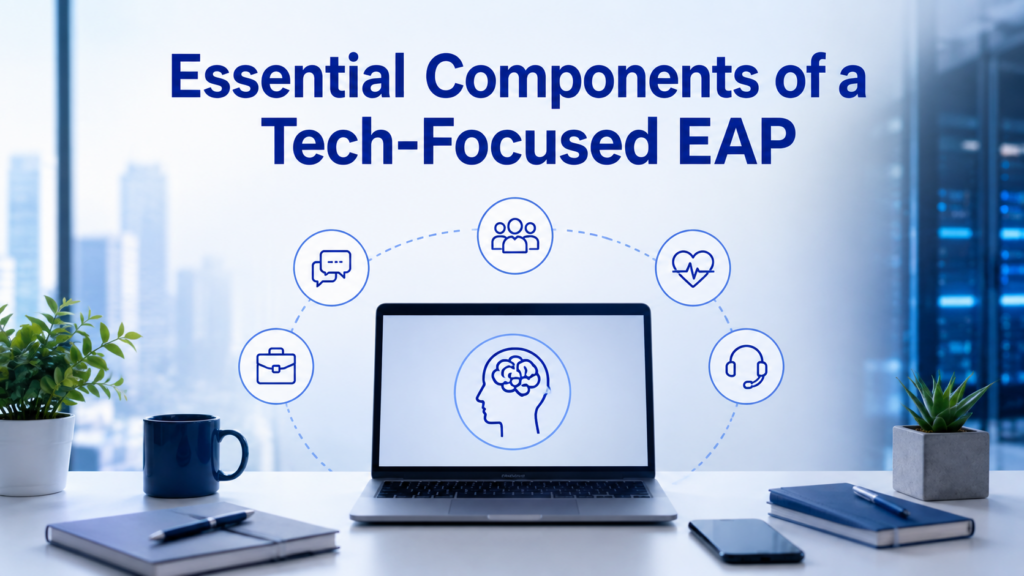
Core Components of a Tech-Optimized EAP
A tech-focused EAP should offer accessible support and resources that align with the unique working patterns, pressures, and challenges employees may experience in the technology industry.
1. Mental Health Counseling With Real Speed
Short-term counseling can be an important component of an EAP for tech employees. Organizations should evaluate how employees access counseling, the qualifications of participating professionals, the number of sessions available, and the process for connecting employees with additional care when needed.
Depending on the provider, employees may be able to access services through video, phone, digital platforms, or in-person appointments.
2. Burnout-Specific Programming
Employees in high-pressure environments may experience different forms of workplace stress. Organizations can evaluate whether an EAP provides professional resources that help employees discuss challenges and access appropriate support.
The EAP should also be considered alongside broader organizational efforts to address factors that may contribute to ongoing workplace pressure.
3. AI Anxiety and Career Transition Support
Rapid changes in technology can create uncertainty about skills, career development, and changing job responsibilities. Employees may benefit from resources that help them manage professional transitions and personal concerns related to workplace change.
Depending on the provider, an EAP may offer consultations, guidance, coaching, or referrals relevant to these challenges.
4. Financial Counseling
Financial concerns can create additional pressure for employees. Some EAPs provide financial guidance, budgeting resources, debt-management information, or referrals to appropriate services.
Organizations can consider whether these resources are relevant to the needs of their workforce.
5. Manager and Leadership Support
Managers and leaders may experience significant workplace pressures while also supporting their teams. Some EAPs provide manager consultation, leadership guidance, or resources for conducting appropriate conversations about employee wellbeing.
Manager support can help leaders understand available resources and referral pathways without expecting them to act as mental health professionals.
6. Digital Wellness Tools for Between-Session Support
Digital resources can complement counseling and other professional services. Depending on the provider, employees may have access to mindfulness exercises, sleep resources, resilience content, and other self-guided wellbeing tools.
These resources can give employees additional options for exploring wellbeing topics privately and at their own pace.
7. 24/7 Crisis Access
Organizations should review the support arrangements available through an EAP for urgent or crises. Depending on the provider and program, these may include crisis lines, immediate guidance, emergency resources, or referrals to appropriate services.
The availability and delivery of crisis support can vary between providers.
Benefits of an EAP for Tech Companies
An EAP can provide technology employees with an additional source of professional and practical support. The specific benefits will depend on the provider, available services, workforce needs, and how employees engage with the program.
- Accessible Professional Support – Employees can access counseling and other professional resources for personal and work-related challenges.
- Flexible Access Options – Depending on the provider, employees may be able to access services through digital, phone, video, or in-person channels.
- Support for Workplace and Personal Challenges – Available services may help employees access appropriate resources for a range of concerns.
- Resources for Managers – Manager consultation and guidance can help leaders understand available support and appropriate referral pathways.
- Financial and Practical Resources – Some EAPs provide financial guidance, legal consultations, or referrals for practical concerns.
- Self-Guided Wellbeing Tools – Digital resources can give employees additional options for exploring wellbeing topics privately and at their own pace.
How to Implement an EAP at Your Tech Company
Implementing an EAP effectively requires a clear understanding of employee needs, accessible services, and a communication strategy that helps employees understand and use the available support.
Step 1 – Understand workforce needs. Gather appropriate feedback to understand the challenges employees experience and the types of support they may value.
Step 2 – Evaluate provider capabilities. Review available services, professional qualifications, access arrangements, confidentiality practices, digital delivery options, and support for distributed teams.
Step 3 – Consider accessibility. Employees should understand how to access available services. Organizations can evaluate whether the provider’s access model fits different working patterns and locations.
Step 4 – Communicate clearly and consistently. Explain what services are available, how employees can access them, and how confidentiality is handled. Reinforce this information through onboarding and regular internal communications.
Step 5 – Support managers appropriately. Managers can benefit from guidance on workplace wellbeing, appropriate conversations, and available referral pathways. They should not be expected to act as mental health professionals.
Step 6 – Address workplace contributors to stress. An EAP can provide individual support, but it cannot independently resolve organizational factors that contribute to ongoing pressure. Employers should also consider workloads, communication practices, management approaches, and workplace culture.
Step 7 – Review the program regularly. Organizations can review available aggregate program information and employee feedback where appropriate to assess whether the program continues to meet workforce needs.
Conclusion
Technology employees may experience workplace pressures related to high workloads, rapid change, distributed working patterns, organizational uncertainty, and other professional or personal challenges.
An EAP for tech companies can provide confidential access to professional support and practical resources. Depending on the provider, available services may include counseling, financial guidance, manager consultation, crisis resources, and digital wellbeing tools.
The value of an EAP will depend on workforce needs, service accessibility, employee awareness, provider quality, and the wider workplace environment.
An effective approach to employee wellbeing recognizes that individual support and organizational conditions both matter. An EAP can provide an important source of support while employers continue to examine the workplace factors that may contribute to ongoing stress.
Frequently Asked Questions
Yes. Depending on the provider and program, an EAP may offer digital and remote access options that support employees working across different locations and schedules. Organizations should evaluate whether the provider’s delivery model aligns with the needs of their workforce
Organizations can review available aggregate utilization information, employee feedback, service satisfaction data, and other program information provided by the EAP. The most appropriate measures will depend on the organization’s goals and the provider’s reporting arrangements.
Some providers use technology and AI-enabled tools to support areas such as care navigation, resource recommendations, and employee engagement. Organizations should evaluate how these tools are used, how personal information is handled, and the role qualified professionals play in delivering clinical or other sensitive support.
Yes. Depending on the provider and program, an EAP may offer digital and remote access options that support employees working across different locations and schedules. Organizations should evaluate whether the provider’s delivery model aligns with the needs of their workforce
Organizations can review available aggregate utilization information, employee feedback, service satisfaction data, and other program information provided by the EAP. The most appropriate measures will depend on the organization’s goals and the provider’s reporting arrangements.
Some providers use technology and AI-enabled tools to support areas such as care navigation, resource recommendations, and employee engagement. Organizations should evaluate how these tools are used, how personal information is handled, and the role qualified professionals play in delivering clinical or other sensitive support.