

Construction work involves demanding physical conditions, changing project schedules, and workplace pressures that can affect employee wellbeing. Alongside established physical safety concerns, employers are increasingly considering how stress, fatigue, isolation, and personal challenges may affect workers across the industry.
Construction employees may experience wellbeing challenges for different reasons. Project timelines, physically demanding work, time away from home, changing work locations, and periods of employment uncertainty can all contribute to pressure.
This guide explores why employee wellbeing matters in construction, the types of workplace support organizations may consider, and how employers can build a broader approach to supporting workers across different job sites and projects.
Workplace Wellbeing Challenges in Construction
Construction work can involve risks and pressures that extend beyond physical hazards. Employees may experience physically demanding work, changing schedules, job uncertainty, extended periods away from family, or isolation on remote projects.
These experiences can affect workers differently depending on their role, project location, working arrangements, and personal circumstances.
Mental health and wellbeing are increasingly recognized as important workplace considerations across the construction industry. Employers can consider how workplace conditions, access to support, and organizational culture influence whether employees feel able to seek help when they experience personal or work-related challenges.
Why Employee Wellness Matters in Construction
Employee wellbeing can influence many aspects of the workplace. Ongoing physical or emotional pressure may affect employee engagement, attendance, workplace relationships, and the ability to manage demanding responsibilities.
Workforce stability is also an important consideration. Construction employees often develop valuable technical knowledge and practical experience over time. Supporting employee wellbeing can form one part of a broader approach to maintaining an engaged and sustainable workforce.
Wellness initiatives should not replace established health and safety measures or improvements to workplace conditions. Instead, they can complement broader efforts to support employees and create a healthier working environment.
Addressing Stigma Around Employee Wellbeing
Employees may not always feel comfortable discussing stress, fatigue, or other wellbeing concerns at work. Workplace culture and concerns about how others may respond can affect whether employees seek available support.
Organizations can help reduce unnecessary stigma by communicating clearly about available resources and reinforcing confidentiality where appropriate.
Leadership and supervisor practices can also influence workplace culture. When leaders communicate respectfully about employee wellbeing and supervisors understand how to direct workers toward available resources, employees may find it easier to seek support when needed.
Wellness Programs for Construction May Include
Construction workers may have different schedules, work locations, and access requirements from office-based employees. Organizations can consider a range of support options based on the needs of their workforce and operating environment.
1. Confidential Counseling Access
Confidential access to professional support can form an important part of an employee wellness strategy. Organizations can evaluate whether workers have access to appropriate counseling, support resources, or referral pathways.
Depending on the provider and program, services may be available through phone, video, digital platforms, or other access arrangements.
2. Employee Assistance Programs
An employee assistance program can provide confidential access to professional support for personal and work-related challenges. Depending on the provider and program, available services may include short-term counseling, financial guidance, legal consultations, and referrals to other resources.
An EAP can complement a broader construction employee wellness strategy by providing workers with an additional pathway to professional and practical support.
3. Wellbeing Communication and Check-Ins
Existing workplace communication channels, such as toolbox talks or safety briefings, may provide opportunities to share information about available wellbeing resources.
Organizations can consider how to communicate support options in ways that fit the working patterns and environments of their employees. Supervisors should understand the boundaries of their role and avoid being expected to provide professional mental health support.
4. Physical Health and Workplace Safety
Physical health and workplace safety remain important considerations in construction. Organizations may provide resources such as ergonomic guidance, lifting training, appropriate equipment, or other workplace health initiatives.
The most appropriate measures will depend on the nature of the work, workplace conditions, and established health and safety requirements.
5. Substance Use Support and Referral Resources
Some employees may experience challenges related to substance use or pain management. Organizations can consider whether confidential support, professional guidance, or referral pathways are available for employees who need assistance.
Available services and approaches will depend on the organization’s policies, local resources, and the employee support programs in place.
6. Peer Support and Workplace Connection
Some organizations may provide peer networks or other opportunities for employees to connect with colleagues who understand the working environment.
These initiatives can provide an additional source of workplace connection. Organizations should establish clear boundaries around peer support and ensure employees understand when professional assistance may be more appropriate.
7. Supervisor Guidance and Training
Supervisors can influence how employees experience the workplace and access available support. Training and guidance can help them understand appropriate approaches to conversations about wellbeing, fatigue, or workplace concerns.
Supervisors should not be expected to act as mental health professionals. Their role is to support appropriate workplace conversations and direct employees toward relevant resources when needed.
8. Understanding Workforce Needs
Organizations can gather appropriate employee feedback before introducing or expanding wellness initiatives. Surveys, feedback channels, and direct conversations may help employers better understand the challenges workers experience and the types of support they may value.
Workforce needs and project conditions can change over time, so organizations may also benefit from reviewing available initiatives periodically.
Trends Shaping Construction Employee Wellbeing
Construction employers and industry organizations are increasingly paying attention to employee mental health and wellbeing alongside traditional workplace safety concerns.
Digital tools may provide additional ways for employees to access wellbeing information and support resources. Depending on the organization and provider, these may include digital resources, remote counseling access, care navigation, or other forms of support.
Technology should complement, rather than replace, appropriate human and professional support. Organizations should also consider accessibility, privacy, and the practical realities of different job sites when introducing digital wellbeing resources.
Common Barriers to Implementation
Organizations may face several challenges when introducing or expanding employee wellness initiatives.
- Budget and resources. Employers may need to prioritize initiatives based on available resources and workforce needs.
- Accessibility. Employees may work across different shifts, locations, or projects. Organizations should consider whether available support is accessible to the workforce they intend to serve.
- Communication and awareness. Workers need clear information about available resources and how those resources can be accessed.
- Consistency. Employee needs and project conditions can change. Regular communication and program review can help ensure that support remains relevant across different job sites and projects.
Understanding the Potential Value of Construction Wellness Programs
The impact of employee wellness initiatives can vary between organizations. Workforce needs, program design, accessibility, participation, workplace conditions, and the services available can all influence how employees experience a program.
Organizations can consider different forms of information when evaluating wellness initiatives. Depending on the program, this may include employee feedback, participation information, service satisfaction, and relevant workplace indicators where appropriate.
Employee wellness programs should not be viewed as a guaranteed solution to challenges such as turnover, absence, workplace incidents, or project performance. Instead, they can form one part of a broader approach that also considers workplace safety, scheduling, workload, management practices, and organizational culture.
Building a Supportive Workplace Culture
A wellness initiative may have limited value if employees are unaware of available resources or do not feel comfortable accessing them.
Organizations can communicate support options clearly and regularly across different job sites and projects. Leaders and supervisors can also help create an environment where employees feel comfortable raising appropriate concerns about wellbeing, fatigue, workload, or workplace conditions.
Regular employee feedback and program review can help organizations understand whether available initiatives continue to align with workforce needs.
Everyday workplace practices also matter. Appropriate rest opportunities, safe working conditions, clear communication, and respectful management can complement more formal wellness resources.
The Future of Employee Wellbeing in Construction
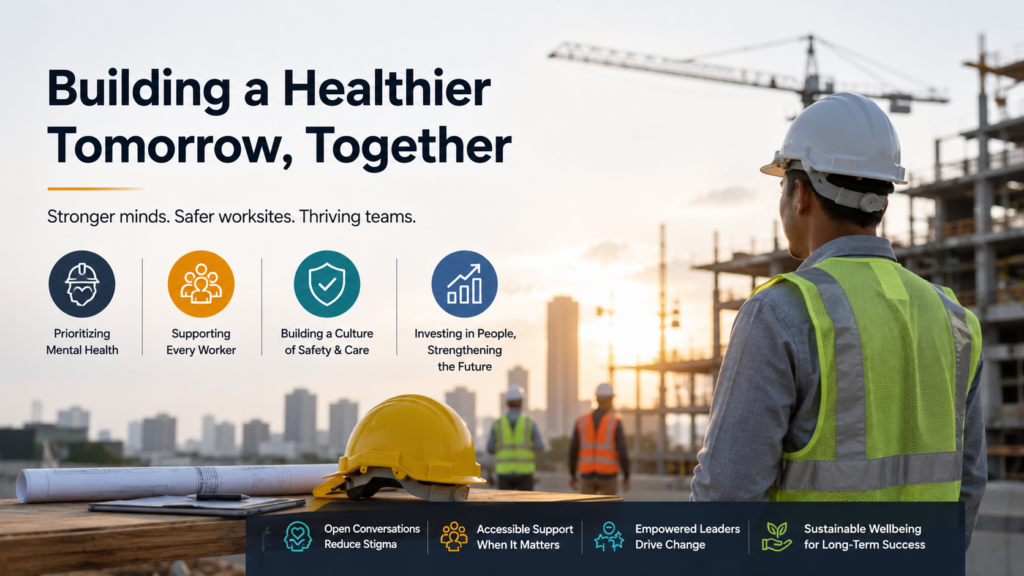
Construction continues to evolve as workforce expectations, technology, project requirements, and workplace practices change.
Supporting employee wellbeing can form an important part of responding to these changes. Organizations can consider both the individual resources available to workers and the workplace conditions that may contribute to ongoing physical or emotional pressure.
A sustainable approach recognizes that employee wellbeing involves more than a single initiative. Workplace safety, scheduling, workload, management practices, communication, and access to professional support can all play a role.
Conclusion
Construction employees may experience workplace pressures related to physically demanding work, changing schedules, project requirements, time away from home, and personal circumstances.
Employee wellness programs can provide workers with additional resources and support. Depending on the organization, these may include professional counseling, EAP services, physical health resources, supervisor guidance, and other forms of support.
The value of a wellness strategy will depend on workforce needs, service accessibility, employee awareness, and the wider workplace environment.
An effective approach recognizes that individual support and organizational conditions both matter. Employee wellness programs can complement broader efforts to review workplace safety, workloads, scheduling, management practices, communication, and workplace culture.
Frequently Asked Questions
Construction employees may experience pressures related to physically demanding work, changing project schedules, time away from home, job uncertainty, workplace conditions, and personal circumstances. The experience of workplace stress and wellbeing challenges will vary between employees, roles, and organizations.
An EAP typically offers short-term counseling and referral services. A complete employee wellness program strategy adds physical health support, substance use resources, peer networks, and supervisor training on top of that base.
Smaller construction companies can consider wellness initiatives that align with their available resources and workforce needs. Options may include clear communication about available support, supervisor guidance, appropriate referral pathways, and other accessible workplace resources.
Employee wellbeing can be one factor that influences workforce engagement and retention. However, retention is affected by many factors, including compensation, career opportunities, project conditions, workloads, management practices, workplace culture, and local labor market conditions. Wellness initiatives can complement a broader workforce retention strategy.
Supervisors can help employees understand available workplace resources and create an environment where appropriate concerns can be raised respectfully. Training can help supervisors understand suitable approaches to wellbeing conversations and relevant referral pathways. Supervisors should not be expected to act as mental health professionals.