

Shift work, physical demands, and ongoing production pressure can affect the wellbeing of employees across factory floors, warehouses, and distribution centers. For FMCG and CPG companies, supporting employee wellbeing can form an important part of a broader approach to workforce health, safety, and engagement.
The industry operates at a fast pace. Production schedules, supply chain demands, changing technologies, and evolving workforce needs can create different pressures for frontline employees. Organizations therefore need to consider how workplace conditions and available support affect the people who keep their operations moving.
This guide explores the factors that can influence employee wellbeing in FMCG and CPG operations, along with the types of workplace wellness initiatives organizations may consider.
The Physical Demands of FMCG and CPG Work
Many roles across manufacturing, warehousing, and distribution involve physically demanding work. Employees may spend long periods standing, performing repetitive movements, lifting materials, or working across extended shifts.
Over time, these demands may contribute to physical discomfort and occupational health concerns. The specific risks will vary depending on the role, workplace design, equipment, and working practices.
Fatigue can also be an important consideration, particularly in operations that run across multiple shifts. Employers can consider how scheduling, rest opportunities, workload, and workplace conditions affect employee wellbeing and safety.
The Mental and Emotional Side of Employee Wellbeing
Physical demands are only one part of the employee wellbeing picture. Workers may also experience stress related to production targets, shift patterns, job uncertainty, financial concerns, workplace relationships, and personal responsibilities.
Employees may not always feel comfortable discussing these challenges openly. Workplace culture and concerns about stigma can affect whether employees seek support when they need it.
A broader approach to employee wellness can give workers access to appropriate resources while helping organizations create a workplace where conversations about wellbeing are handled respectfully and without unnecessary stigma.
Why Employee Wellness Matters in FMCG and CPG Operations
Employee wellbeing can affect many aspects of the workplace. When employees experience ongoing physical or emotional pressure, organizations may also need to consider the potential effects on engagement, attendance, workforce stability, and workplace safety.
Retention is another important consideration for FMCG and CPG employers. Experienced operators, supervisors, technicians, and warehouse employees often develop valuable role-specific knowledge. Supporting employee wellbeing can form one part of a broader strategy for maintaining a stable and engaged workforce.
Wellness initiatives should not replace workplace safety or operational improvements. Instead, they can complement broader efforts to create working conditions that support both employee wellbeing and organizational needs.
What Wellness Programs for FMCG and CPG May Include
Generic wellness initiatives may not always reflect the working patterns and physical demands of factory, warehouse, and distribution employees. Organizations can consider a range of support options based on the needs of their workforce and operating environment.
1. Physical Health and Ergonomic Support
Organizations can consider measures such as ergonomic assessments, lifting guidance, workplace design improvements, and access to appropriate physical health resources.
These initiatives may help employers identify and address workplace factors that contribute to physical strain. The most suitable approach will depend on the nature of the work and the needs of employees.
2. Confidential Mental Health Counseling
Access to counselors, by phone or in person, gives workers a private way to manage stress. This should be available across all shifts, not just standard daytime hours, since many plants run continuously.
3. Employee Assistance Programs
An employee assistance program can provide confidential access to professional support for personal and work-related challenges. Depending on the provider and program, services may include short-term counseling, financial guidance, legal consultations, and referrals to other resources.
An EAP can complement a broader employee wellness strategy by providing employees with an additional pathway to confidential support.
4. Shift-Friendly Scheduling Practices
Shift patterns and night work can affect employees in different ways. Organizations can consider how scheduling practices, rest opportunities, workload, and recovery time align with the needs of their workforce.
Workplace requirements may limit the flexibility available in some operations, but employers can still review whether scheduling practices create avoidable sources of pressure or fatigue.
5. Fatigue Management
Fatigue management can form an important part of a broader workplace health and safety approach. Depending on the operating environment, organizations may consider rest arrangements, hydration access, workload management, and appropriate procedures for identifying fatigue-related concerns.
The most appropriate approach will depend on the nature of the work, shift patterns, and workplace conditions.
6. Supervisor and Line Manager Training
Line supervisors are often the first to notice when a worker is struggling, whether from physical pain, stress, or personal circumstances. Training them to recognize warning signs and respond with support extends wellness efforts beyond the HR office and onto the floor itself.
7. Peer Support Networks
Trained peer supporters give workers someone approachable to talk to. This is especially valuable in large plants and distribution centers where workers may feel like a number rather than a person.
8. Needs Assessments Across Every Site
Before rolling out any program, companies should assess what different sites actually need. A packaging plant and a cold-storage warehouse face different physical and scheduling demands. Surveys and direct conversations with workers reveal the real pain points at each location.
Industry Trends Shaping Workplace Wellbeing
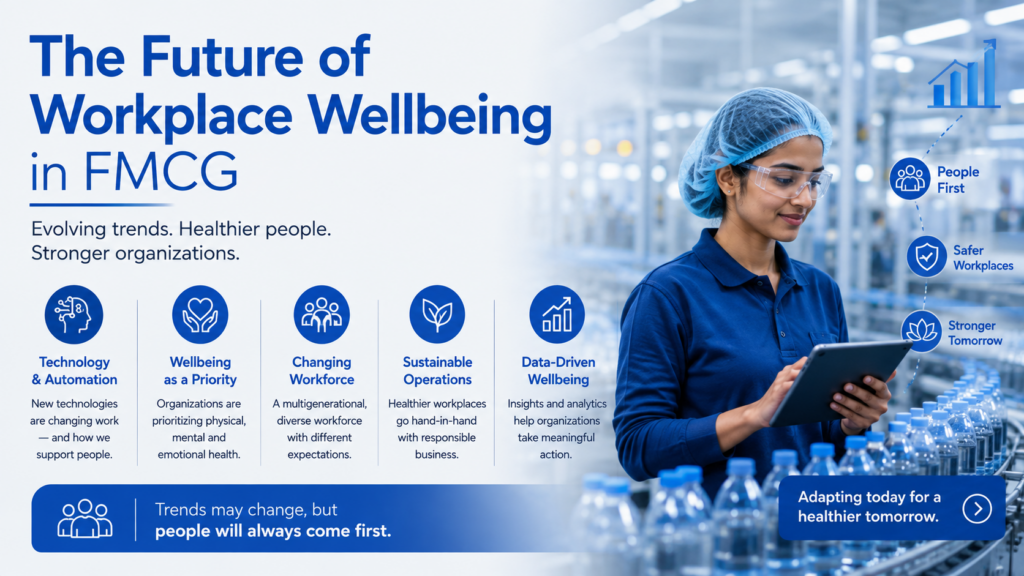
Automation, digital technologies, and AI are continuing to influence FMCG and CPG operations. These changes may affect job responsibilities, skills requirements, workflows, and employee expectations.
For some employees, workplace change may create opportunities for new skills and career development. For others, it may create uncertainty about changing roles or future employment.
Organizations can support employees during periods of change through clear communication, appropriate training opportunities, and access to relevant workplace resources.
Regulatory and organizational attention to both physical and psychological wellbeing is also increasing. Employers should consider how their existing workplace health, safety, and employee support strategies reflect the needs of their workforce.
Common Barriers to Implementation
Organizations may face several challenges when introducing or expanding employee wellness initiatives.
Budget considerations. Employers may need to prioritize initiatives based on available resources and workforce needs.
Accessibility. Employees working different shifts or across multiple locations may have different access requirements. Organizations should consider whether available resources are accessible to the workforce they intend to support.
Communication and awareness. Employees need clear information about the resources available to them and how those services can be accessed.
Consistency. Employee needs and workplace conditions can change over time. Regular review can help organizations assess whether wellness initiatives continue to align with workforce requirements.
Understanding the Potential Value of Employee Wellness Programs
The impact of employee wellness initiatives can vary between organizations. Workforce needs, program design, participation, workplace conditions, and the services available can all influence how employees experience a program.
Employers may consider a range of factors when evaluating the value of workplace wellness initiatives. These can include employee feedback, workforce needs, program accessibility, participation information, and relevant health and safety indicators where appropriate.
Wellness programs should not be viewed as a guaranteed solution to challenges such as turnover, absence, or workplace injuries. Instead, they can form one part of a broader approach that also considers workplace safety, scheduling, workload, management practices, and organizational culture.
Building a Supportive Workplace Culture
A wellness initiative can have limited value if employees are unaware of the available resources or do not feel comfortable accessing them.
Organizations can communicate support options clearly and regularly across different sites and shifts. Leaders and managers can also help create an environment where employees feel comfortable raising appropriate concerns about wellbeing, workload, fatigue, or workplace conditions.
Regular employee feedback and program review can help organizations understand whether available initiatives continue to meet workforce needs.
Everyday workplace practices can also contribute to employee wellbeing. Access to appropriate rest opportunities, hydration, safe working conditions, and respectful management can complement more formal wellness resources.
The Path Forward
The FMCG and CPG industry continues to evolve as technology, automation, workforce expectations, and operating requirements change.
Supporting employee wellbeing can form an important part of preparing for these changes. Organizations can consider both the individual support available to employees and the workplace conditions that may contribute to ongoing physical or emotional pressure.
A sustainable approach recognizes that employee wellbeing involves more than a single program. Workplace safety, scheduling, workloads, management practices, communication, and access to professional support can all play a role.
Conclusion
Employees across FMCG and CPG operations may experience a combination of physical demands, shift-related challenges, production pressures, and personal responsibilities.
Workplace wellness initiatives can provide employees with additional resources and support. Depending on the organization, these may include physical health initiatives, confidential professional support, fatigue management, manager training, and other workforce resources.
The most effective approach will depend on the needs of the workforce and the operating environment. Organizations should also recognize that employee wellness programs cannot independently resolve workplace conditions that contribute to ongoing pressure.
A broader approach considers both individual support and the systems employees work within. By reviewing workplace conditions and making appropriate support accessible, FMCG and CPG employers can continue to develop workplace strategies that reflect the needs of their people and operations.
Frequently Asked Questions
Why is occupational health such a pressing concern in FMCG and CPG operations?
Repetitive tasks, heavy lifting, shift work, and constant production pressure combine to create high rates of physical strain and burnout across the sector.
What is the difference between an EAP and a broader wellness program?
An EAP typically offers short-term counseling and referral services. Broader employee wellness programs add physical health support, fatigue management, peer networks, and supervisor training on top of that base.
How can smaller CPG manufacturers afford wellness programs?
Smaller companies can start with low-cost steps like supervisor training, peer support, and shift-adjusted rest breaks, building meaningful support for FMCG employee wellness without a large budget.
Does investing in wellness reduce turnover in manufacturing and warehousing?
Employee wellbeing can be one factor that influences workforce engagement and retention. However, turnover is affected by many factors, including pay, career opportunities, working conditions, management practices, and local labor market conditions. Wellness initiatives can complement a broader employee retention strategy.
What role do line supervisors play in supporting worker wellbeing?
Supervisors are often the first to notice signs of fatigue, injury, or stress on the floor. Training them to respond with support rather than dismissal is central to any effective corporate wellness program.