

Small businesses often operate with lean teams and limited capacity. When an employee is struggling, takes an unplanned absence, or leaves the organization, the effects can be felt across the entire business.
For many small business owners, employee wellbeing can seem difficult to prioritize alongside operational demands and limited budgets. Some may also assume that professional employee support programs are designed primarily for larger organizations.
An EAP for small businesses can provide employees with access to professional support for personal and work-related challenges. This guide explains how these programs work, what services small businesses may prioritize, and how to evaluate an option that fits their workforce and budget.
What is an EAP for Small Business?
An employee assistance program is an employer-sponsored benefit that can provide confidential access to professional support for personal and work-related challenges. Available services vary by provider and program but may include counseling, financial guidance, legal consultations, crisis support, and other resources.
An EAP for small business follows the same model – but is specifically designed or selected to fit a smaller workforce, a leaner budget, and the organizational realities of a team where every person carries significant weight.
Small business EAPs are increasingly delivered through digital-first platforms, per-employee-per-month pricing models, and scalable service tiers – making them genuinely accessible to companies with 10, 25, or 50 employees. They are no longer the exclusive domain of enterprises.
Employee assistance programs are available to organizations of different sizes. For small businesses, the challenge is often finding a program that aligns with their workforce needs, available budget, and preferred approach to service delivery.
Why Small Businesses Need an EAP More Than They Realize
Small businesses often operate with lean teams, making employee wellbeing challenges more likely to affect workloads, team capacity, and day-to-day operations.
Every Employee Carries More Weight
Small businesses often operate with leaner teams and fewer opportunities to redistribute work. When an employee experiences ongoing challenges that affect their availability or capacity, colleagues may need to take on additional responsibilities.
This can place extra pressure on the wider team, particularly when workloads and staffing levels are already limited.
Workplace mental health challenges in small businesses are not contained. These challenges can also affect the wider team, particularly when colleagues need to take on additional responsibilities or workloads.
Turnover Is Devastatingly Expensive
Employee turnover can create high costs for small businesses. Recruitment, onboarding, training, lost institutional knowledge, and temporary gaps in workforce capacity can all affect operations.
For a small team, even one departure may have a noticeable impact. Organizations may therefore consider employee wellbeing and access to support as part of a broader approach to retention and workforce stability.
An EAP can provide employees with confidential access to professional resources when they are dealing with personal or work-related challenges.
Small Business Owners Are Under Pressure Too
Small business owners and managers often carry significant responsibility for operations, finances, employees, and long-term business decisions. These demands can create ongoing pressure, particularly in organizations with limited leadership capacity.
When evaluating an EAP, organizations may consider whether the program also provides appropriate support and resources for owners, managers, and other leaders.
Benefits Drive Recruitment and Retention
Small businesses may not always be able to compete with larger employers on salary or benefit scale. However, employee support, workplace culture, and accessible wellbeing resources can still form part of a broader employee value proposition.
A well-communicated EAP can complement other workplace benefits by giving employees access to professional support when they need it.
The Business Case for an EAP for Small Business
Cost is often one of the first considerations for small businesses evaluating an EAP. The value of a program, however, should be assessed in relation to the needs of the workforce, the services provided, employee awareness, and how effectively the program fits into the organization’s broader approach to wellbeing.
An EAP can provide employees with access to professional support for challenges that may otherwise remain unaddressed. Depending on the provider, services may include counseling, financial guidance, legal consultations, crisis support, and other practical resources.
The impact of an EAP will vary between organizations. Utilization, workforce needs, program design, and the wider workplace environment can all influence how employees use and benefit from the available services.
For small businesses, an EAP may represent a practical way to make professional support available without building and managing these services internally.
Core EAP Services Small Businesses Should Prioritize
Not every EAP is designed for small business realities. When evaluating providers, focus on the services that deliver the highest value for a lean team.
Mental Health Counseling
Short-term counseling can form an important part of an employee assistance program. Organizations should evaluate the number of sessions available, the qualifications of participating professionals, access arrangements, and the process for connecting employees with additional care when needed.
Mental health challenges can affect many areas of an employee’s life. Access to appropriate professional support can help employees address concerns and explore available options for care.
Financial Counseling
Financial concerns can create additional pressure for employees. Some EAPs provide confidential financial guidance, budgeting resources, debt-management information, or referrals to appropriate services.
Legal Consultation
Employees may also experience personal legal concerns that create additional stress. Some EAPs provide legal consultations, general guidance, or referrals that can help employees understand their available options.
Crisis Intervention
Small businesses may experience unexpected events that affect employees and the wider workplace. Organizations should evaluate whether an EAP provider offers appropriate crisis support arrangements and how employees can access relevant services when needed.
Digital Wellness Tools
Digital wellness tools can complement counseling and other professional services. Depending on the provider, employees may have access to mindfulness exercises, sleep resources, resilience content, mood tracking, and other self-guided wellbeing tools.
Manager and Owner Resources
Small business owners and managers may also benefit from access to relevant support and resources. Organizations can consider programs that provide manager consultation, leadership guidance, or resources for conducting appropriate conversations about employee wellbeing.
Benefits of an EAP for Small Business
An EAP can give small businesses a structured way to provide employees with access to professional support. The specific benefits will depend on the provider, available services, workforce needs, and how employees engage with the program.
- Accessible Professional Support – Employees can access counseling and other professional resources for personal and work-related challenges.
- Support for a Lean Workforce – An EAP can provide an additional source of support when employees need help managing challenges outside the direct role of managers or business owners.
- Financial and Legal Guidance – Some programs offer financial resources, legal consultations, or referrals for practical personal concerns.
- Crisis Support – Depending on the provider, employees may have access to crisis support and appropriate referral arrangements.
- Resources for Managers and Leaders – Some EAPs provide consultation, coaching, or guidance that helps managers understand available support resources.
- Digital Wellbeing Tools – Employees may have access to self-guided resources that they can use privately and at their own pace.
- Support for Workplace Wellbeing – An EAP can complement broader efforts to create a supportive workplace environment.
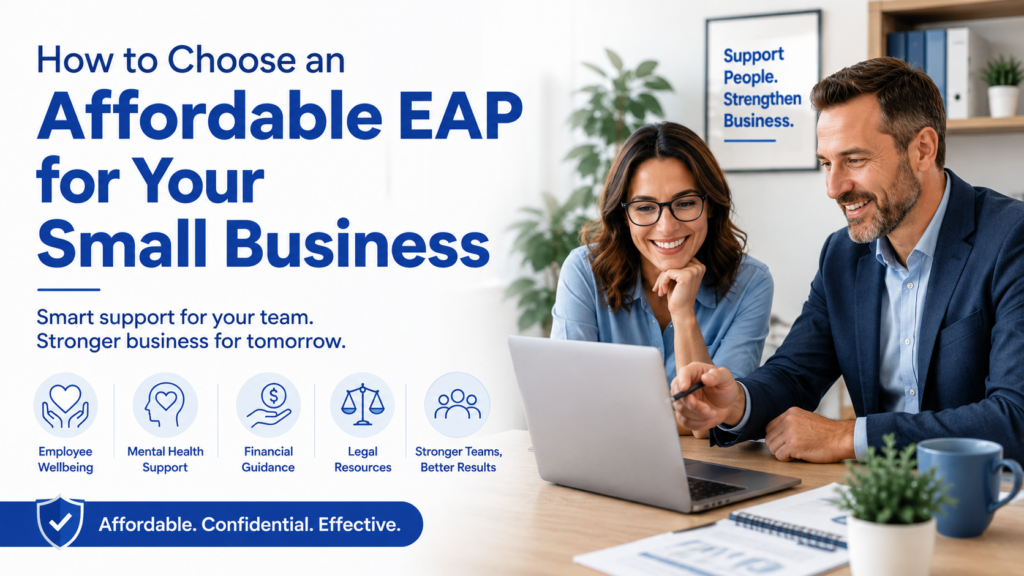
How to Choose an Affordable EAP for Your Small Business
Choosing an affordable EAP does not have to mean overlooking service quality or accessibility. Small businesses should compare providers based on their services, delivery options, pricing structure, and alignment with workforce needs.
- Pricing and service model: Review how the provider structures its pricing and what services are included. Organizations should also ask about any additional fees and evaluate whether the program fits their budget and workforce needs.
- Counseling availability: Review the number of sessions included, the qualifications of available professionals, and the process for accessing additional care when needed.
- Access arrangements: Ask providers how employees access services, typical response arrangements for non-urgent support, and what options are available during a crisis.
- Service delivery: Consider whether employees can access services through options such as video, phone, digital platforms, or in-person appointments, depending on workforce needs and provider availability.
- Range of services: Review whether the provider offers services relevant to the needs of your workforce. Depending on the program, these may include counseling, financial guidance, legal consultations, work-life resources, and self-guided wellbeing tools.
- Confidentiality and privacy: Employees should understand how the provider handles personal information and what information, if any, is shared with the employer. Organizations should review the provider’s confidentiality practices, privacy policies, and reporting arrangements.
- Scalability: If you plan to grow, ensure your EAP vendor can scale with you without requiring a complete program overhaul at 50 or 100 employees.
How to Implement an EAP at Your Small Business
Implementing an EAP requires more than simply selecting a provider. Small businesses should consider employee needs, accessibility, clear communication, and ongoing program review to help ensure the available support remains relevant and easy to access.
Step 1 – Survey your team. Before selecting a vendor, ask employees anonymously about their primary stressors – financial pressure, workload, personal challenges, or access to mental health care. Use this data to match vendor services to actual team needs.
Step 2 — Set a realistic budget. Review the expected cost of the program alongside the services provided and the needs of your workforce. Choose an option that is sustainable for the organization.
Step 3 — Choose an accessible delivery model. Consider how employees will access available services. Depending on the workforce, digital access, phone support, and in-person options may all be relevant factors.
Step 4 — Communicate clearly and consistently. Employees need to understand what support is available and how to access it. Organizations can introduce the EAP during onboarding and provide regular reminders through team meetings, internal communications, and other appropriate channels.
Step 5 — Encourage a supportive culture. Owners and managers can help reduce uncertainty around employee support by communicating available resources clearly and encouraging respectful conversations about wellbeing without pressuring employees to disclose personal information.
Step 6 — Review the program regularly. Request available aggregate utilization information and review employee feedback where appropriate. Organizations can use this information to assess service quality, employee awareness, and whether the program continues to meet workforce needs.
Common Mistakes Small Businesses Make With EAPs
Even a well-designed EAP may have limited value if employees are unaware of it, unable to access it easily, or if the program does not align with the needs of the workforce. Small businesses should avoid common implementation and provider-selection mistakes when introducing employee support.
Choosing based on price alone. Cost is an important consideration, but small businesses should also evaluate the services available, access arrangements, provider quality, and alignment with workforce needs. A lower-cost program may not provide the same range or level of support as another option.
Communicating the EAP only at onboarding. Employees may not remember every benefit introduced during their first days at work. Organizations can reinforce awareness by providing clear information about the EAP through regular team communications and other appropriate channels.
Failing to consider leadership needs. Small business owners and managers may also experience significant workplace pressures. Organizations should consider whether their EAP provides appropriate resources and support for leaders as well as other employees.
Treating the EAP as a standalone solution. An EAP can complement broader workplace wellbeing efforts, including appropriate workloads, effective communication, flexibility where possible, and a supportive workplace culture. Organizations should consider the EAP as one part of a wider approach to employee wellbeing.
Conclusion
Small businesses face many of the same employee wellbeing challenges as larger organizations, often while operating with leaner teams and fewer internal resources.
An EAP for small businesses can provide employees with access to professional support for personal and work-related challenges. Depending on the provider, these services may include counseling, financial guidance, legal resources, crisis support, and self-guided wellbeing tools.
The value of an EAP will depend on the needs of the workforce, the services provided, employee awareness, accessibility, and the broader workplace environment. For small businesses, it can form one part of a wider approach to supporting employees and building a sustainable workplace culture.
Frequently Asked Questions
An EAP for small business is an employer-sponsored benefit that can provide confidential access to professional support for personal and work-related challenges. Depending on the provider and program, available services may include mental health counseling, financial guidance, legal consultations, crisis support, and other resources.
Employees can usually access available services through the arrangements established by the provider and employer. Confidentiality and employer reporting practices may vary according to the provider, program design, and applicable laws.
Confidentiality arrangements vary according to the provider, program design, and applicable laws. Employees should be able to understand how their personal information is handled and what information, if any, is shared with the employer. Small businesses should review these arrangements carefully and communicate them clearly to employees.
The financial impact of an EAP can vary between organizations. Factors such as workforce needs, utilization, available services, program cost, and the wider workplace environment can all influence its value. Small businesses should evaluate an EAP based on whether it provides accessible support that aligns with their employees’ needs and organizational priorities.