

Every unmanaged case of diabetes comes at a cost – not just to the employee, but to the employer as well.
Over 38 million Americans are living with diabetes, with 90% to 95% diagnosed with Type 2. A significant share of them are working adults – in your office, on your factory floor, at your remote workstation. They are managing blood sugar levels, medication schedules, and dietary restrictions alongside their daily responsibilities. And most employers don’t have the systems in place to support them.
That gap is expensive. A corporate diabetes management program is how leading employers are closing it.
The Business Case: What Diabetes Costs Employers
In 2022, the total estimated cost of diagnosed diabetes in the U.S. reached $412.9 billion, with $306.6 billion attributed to direct medical expenses.
But direct medical claims are only part of the picture. The hidden costs – absenteeism, reduced productivity, disability leave – compound the financial burden significantly.
cost employers approximately $412 per employee per year in reduced productivity (presenteeism) and $1,042 per employee per year in missed work (absenteeism).
Type 2 diabetes contributes to nearly $7,000 higher annual per capita costs, mostly due to excess medical spending.
Diabetes can also affect workforce participation, particularly when complications or disability make it harder for people to remain employed. It illustrates the cumulative toll of unmanaged diabetes on workforce participation itself – not just on healthcare claims.
The math is clear. Ignoring diabetes in the workplace is far more expensive than addressing it.
What Is a Corporate Diabetes Management Program?
A corporate diabetes management program is an employer-sponsored initiative that provides structured, ongoing support for employees with diabetes or prediabetes. It combines clinical care, behavioral coaching, digital tools, nutrition guidance, and medication management into a cohesive, personalized program.
| Traditional Wellness Programs | Corporate Diabetes Management Programs |
|---|---|
| Targets the general workforce | Focuses on employees with diabetes or prediabetes |
| Broad fitness and nutrition initiatives | Personalized diabetes care plans and coaching |
| One-size-fits-all approach | Individualized interventions based on health data |
| Periodic wellness activities | Continuous monitoring and long-term support |
| General health education | Diabetes-specific education, medication support, and CGM integration |
| Measures participation | Measures clinical outcomes, HbA1c improvement, and ROI |
These programs serve two distinct populations:
Employees with existing diabetes – who need help managing HbA1c levels, avoiding complications, maintaining medication adherence, and reducing hospitalizations.
Employees with prediabetes – who need intervention before full diabetes develops.
About 1 in 3 U.S. adults has prediabetes. Without intervention, many could develop type 2 diabetes. Workplace programs can help identify people at risk and connect them with evidence-based prevention and lifestyle support.
A diabetes management program is not a one-time wellness event. It is a sustained, structured benefit – integrated into your existing health plan or employee health offerings – that is designed to improve clinical outcomes and support better healthcare cost management over time.
The Hidden Workforce Impact of Unmanaged Diabetes
Some employees may choose not to disclose their diabetes at work because of privacy concerns, stigma, or fear of workplace consequences. They quietly manage symptoms while absorbing the cost of uncontrolled blood sugar themselves – in fatigue, cognitive fog, missed deadlines, and doctor’s visits squeezed into lunch breaks.
For employers, this translates into:
- Presenteeism: Employees show up but perform at reduced capacity. A study of working adults with Type 2 diabetes found that 93.9% reported productivity loss, with a mean presenteeism score of 7.34 out of 10.
- Absenteeism: Diabetes-related complications drive unplanned sick leave, emergency room visits, and short-term disability claims.
- Long-term disability: Days lost and associated costs due to long-term disability from Type 2 diabetes tend to increase with age, with differences between those with and without diabetes widening over time.
- Higher healthcare claims: Employers should assess potential financial gains from helping workers prevent or better manage Type 2 diabetes. The evidence base for doing so is substantial and growing.
Core Components of an Effective Corporate Diabetes Management Program
Not all employee diabetes management programs are built the same. The most effective ones include the following elements:
1. Biometric Screening and Early Identification
You cannot manage what you cannot measure. Effective programs begin with identifying at-risk employees through:
- Annual biometric screenings (HbA1c, fasting glucose, BMI, blood pressure)
- Health Risk Assessments (HRAs)
- Claims data analysis to flag high-cost patterns
Early identification enables intervention before complications occur and costs spike.
2. Certified Diabetes Education and Self-Management Support (DSMES)
Digital coaching and digital self-management interventions can be effective methods to deliver diabetes self-management education and support, with technology-enabled solutions improving HbA1c most effectively when there is two-way communication between the person with diabetes and the health care team, individualized feedback, use of person-generated health data, and education.
Employers should consider DSMES programs accredited by the Association of Diabetes Care & Education Specialists (ADCES) or recognized through an appropriate diabetes education accreditation program.
3. Dedicated Health Coaching
Human connection drives behavior change. Unlike transactional wellness programs, effective coaching meets employees with sincerity and presence, uncovering the “why” behind unhealthy habits – driving sustainable improvements in chronic disease and resilience.
Certified diabetes educators (CDEs) or registered dietitians should be available to employees through a consistent, ongoing coaching relationship – not a one-off consultation.
4. Continuous Glucose Monitoring (CGM) Integration
The ADA’s 2026 Standards of Care recommend considering technology – including CGM, insulin pumps, and diabetes apps – alongside online or virtual licensed coaching to improve glycemic outcomes in people with diabetes or prediabetes.
CGMs give employees real-time data on how food, activity, stress, and sleep affect their blood sugar. This transforms abstract medical advice into actionable daily insight.
5. Telehealth Access
Remote access to endocrinologists, dietitians, and diabetes educators removes the access barriers that cause employees to delay or skip care. It is especially valuable for remote employees, shift workers, and those in areas with limited specialist access.
6. Medication Adherence Support
Many employees with diabetes do not take their medications consistently. Reminder systems, pharmacist consultations, and appropriate medication-support strategies can help improve adherence and clinical outcomes.
7. Prediabetes Prevention Track
The Diabetes Prevention Program (DPP) randomized clinical trial found that intensive lifestyle modification delivered in a year-long program reduced the incidence of type 2 diabetes by 58% among high-risk participants.
Employers who offer a National DPP lifestyle change program as an employee benefit are investing in prevention – stopping diabetes before it starts, rather than managing it after diagnosis.
The ROI of Corporate Diabetes Management Program
Expanding benefits to include diabetes management programs can create financial value by supporting better health outcomes, productivity, and healthcare cost management. A 12-week study of nearly 600 employees showed that those receiving diabetes management support were more productive and had higher retention than those who did not.
The investment case is further supported by the National Diabetes Prevention Program’s cost-effectiveness data. A 2025 study published in Diabetes Care evaluated the real-world cost-effectiveness of the NDPP for 5,948 adults with prediabetes with employer-sponsored health insurance, assessing direct medical costs and quality-adjusted life years over two years. Findings affirmed the program’s value as a cost-effective employer investment.
For employers already facing substantial diabetes-related medical and productivity costs, a structured diabetes management program can help improve health outcomes and may reduce avoidable costs over time.
Key Benefits of a Corporate Diabetes Management Program
For employers, investing in diabetes management delivers measurable benefits that extend beyond healthcare savings, improving employee health, productivity, and long-term business performance.
| Benefit Area | Impact |
|---|---|
| Healthcare Cost Reduction | Lower claims from fewer ER visits, hospitalizations, and complications |
| Reduced Absenteeism | Fewer unplanned sick days; estimated savings of $1,042/employee/year in missed work |
| Improved Presenteeism | Higher on-the-job performance from better blood sugar control |
| Medication Adherence | Fewer complications from consistent drug therapy |
| Prediabetes Reversal | Up to 58% reduced risk of diabetes with structured lifestyle intervention |
| Employee Retention | Employees with chronic condition support report higher job satisfaction |
| Lower Long-Term Disability | Fewer chronic complications translate to lower LTD claim rates |
| GLP-1 Cost Optimization | Behavioral programs paired with GLP-1 coverage improve medication sustainability |
GLP-1 Medications: Opportunity and Employer Risk
GLP-1 receptor agonists – including semaglutide and tirzepatide – have transformed diabetes and obesity treatment. Their effectiveness is well-documented. But they are also expensive, and their long-term management requires an employer strategy.
More employers are offering GLP-1 coverage – 55% for diabetes, 36% for both diabetes and weight loss – but these may be costly. Inconsistent long-term use makes it difficult for employers to budget and anticipate long-term outcomes. Medication alone does not sustain weight loss; without ongoing support, healthy habits, and lifestyle modification, progress may fade.
A sound corporate diabetes management program can integrate GLP-1 coverage with behavioral coaching, nutrition support, and activity tracking to provide comprehensive support alongside medication. The medication amplifies the lifestyle intervention. The lifestyle intervention sustains the medication’s gains.
How to Build a Corporate Diabetes Management Program: Step-by-Step
“The most effective diabetes management programs don’t just treat the condition—they empower employees to take control of their health every day.”
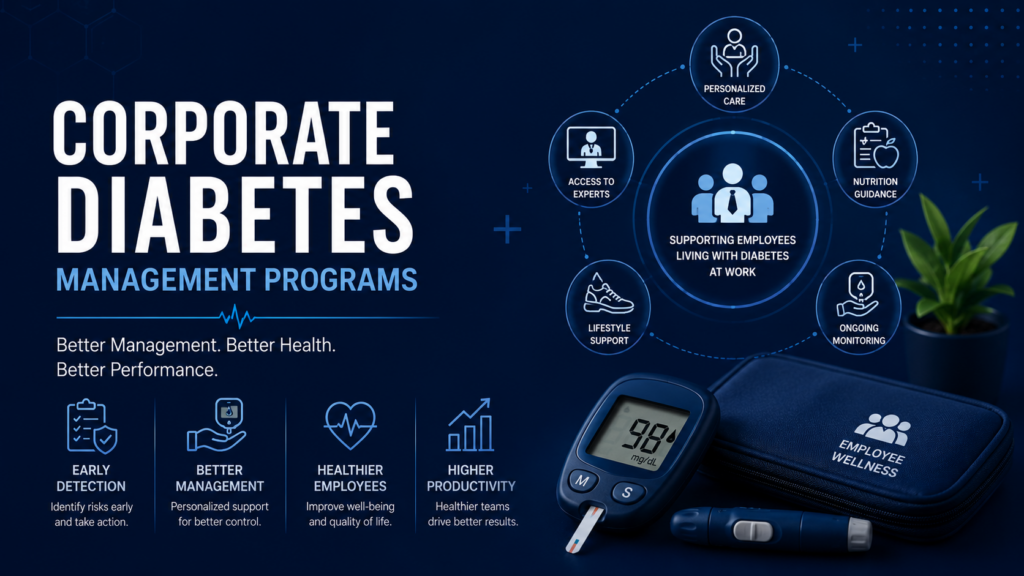
Building a successful corporate diabetes management program requires a strategic, employee-centric approach that combines early intervention, personalized support, technology, and continuous engagement to improve health outcomes and reduce long-term healthcare costs.
Step 1 – Assess Your Population
Use biometric data, HRAs, and claims analysis to understand the prevalence of diabetes and prediabetes in your workforce. Know your numbers before designing your program.
Step 2 – Define Your Scope
Decide whether your program will address existing diabetes only or include a prediabetes prevention track and cardiometabolic comorbidities. The broader the scope, the more comprehensive the program can be, although employers should align its design with workforce needs, available resources, and measurable goals.
Step 3 – Choose the Right Vendor
Evaluate diabetes management vendors on: ADCES accreditation, human coaching availability, CGM integration, clinical outcome data, and engagement rates beyond 12 months. Key considerations include: knowing your audience, defining success for your population, and understanding what outcomes are important to employers and employees for highly useful evaluations.
Step 4 – Integrate With Your Health Plan
Embed the program within your existing health benefits to eliminate friction. Employees should access diabetes support through the same channels as their primary care – not a separate portal they need to discover.
Step 5 – Communicate Clearly and Confidently
Frame the program around health support, not disease surveillance. Emphasize confidentiality. Use multiple communication channels – benefits portals, manager briefings, email, and direct outreach to high-risk individuals identified via claims data.
Step 6 – Leverage the National DPP
If you haven’t already, offer the CDC-recognized National Diabetes Prevention Program as a covered employee benefit. The lifestyle change program can reduce a person’s risk of developing type 2 diabetes by more than half. It is one of the highest-evidence workplace health investments available.
Step 7 – Measure and Report Outcomes
Track HbA1c improvement, participation rates, medical claims reduction, absenteeism data, and return on investment annually. Use this data to refine the program and build the internal case for continued investment.
Workplace Diabetes Management: Creating a Supportive Environment
A corporate diabetes management program only succeeds when the workplace culture supports it. Clinical programs need organizational backing.
Practical steps employers can take:
- Healthy food access: Stock cafeterias and vending machines with low-glycemic, high-protein options. Provide nutrition labeling. Avoid celebrating milestones exclusively with sugar-heavy foods.
- Physical activity opportunities: On-site fitness facilities, walking meetings, step challenges, and subsidized gym memberships all support blood sugar regulation.
- Flexible scheduling: Employees who can attend medical appointments without penalty are less likely to defer care. Deferred care leads to complications. Complications lead to high-cost claims.
- Manager training: Train managers to offer reasonable accommodations – breaks for blood sugar checks, access to snacks, flexibility around insulin injection timing – without requiring disclosure of sensitive medical details.
- Non-discrimination policies: Clear, written policies protecting employees from health-based discrimination build the trust needed for program participation.
Creating a healthy environment benefits all employees. Access to nutritious foods and opportunities for physical activity not only supports diabetes management but also helps prevent the disease and promotes overall wellbeing for all employees.
This is the essence of effective workplace diabetes management: treating the organizational environment as part of the clinical intervention, not separate from it.
Legal Obligations Employers Must Know
Workplace diabetes management operates within a legal and regulatory framework. Depending on how a program is structured, employers may need to consider requirements under:
- ADA (Americans with Disabilities Act): Diabetes is generally considered a disability under the ADA. Employers must provide reasonable accommodations, including time and space for glucose monitoring, medication administration, and medical appointments.
- HIPAA: Health information held by a covered health plan or healthcare provider may be protected under HIPAA. Employers should ensure that employee health information is handled appropriately and is not used improperly for employment decisions.
- GINA: Employers cannot discriminate based on genetic information, including family history of diabetes.
- ACA Wellness Program Rules: Incentive-based programs must be voluntary and cannot penalize employees who cannot meet medical thresholds due to their condition.
Non-compliance is costly – both in legal exposure and in employee trust. Build your employee diabetes management program on a foundation of transparency, confidentiality, and equity.
Emerging Trends in Corporate Diabetes Management
Corporate diabetes management is evolving through AI-powered monitoring, personalized care plans, and digital health solutions that help employees manage diabetes effectively while improving workplace productivity and reducing healthcare costs.
Continuous Glucose Monitoring at Scale
CGMs are moving from clinical settings into workplace wellness programs. Real-time glucose data personalizes nutrition and activity guidance in ways that generic wellness advice cannot. As CGM use expands, employers and benefits providers are increasingly evaluating how these tools can support diabetes and metabolic health programs.
AI-Powered Personalization
Digital diabetes platforms are using artificial intelligence to personalize coaching, predict high-risk events, and optimize medication management. The ADA’s 2026 Standards of Care recognise digital health technology as an important part of diabetes management and recommend considering technology alongside online or virtual licensed coaching to improve glycemic outcomes.
Integration With Mental Health Support
Diabetes and depression frequently co-occur. The emotional burden of managing a chronic condition affects treatment adherence, blood sugar control, and work performance. Leading programs now include lessons and coaching focused on lifestyle behaviors to manage HbA1c, medication therapy and counseling, and support for coexisting behavioral health needs. Mental and physical health support must be integrated, not siloed.
Value-Based Vendor Contracts
Some employers are exploring outcome-based contracts with diabetes management vendors, linking part of vendor compensation to measures such as HbA1c improvement, healthcare utilisation, or other agreed outcomes. This aligns vendor incentives with employer financial goals.
Conclusion
Diabetes doesn’t stay at home when employees come to work. It comes with them – affecting their focus, their energy, their attendance, and ultimately their health outcomes.
A well-designed corporate diabetes management program changes that dynamic. It gives employees the tools, coaching, and clinical support they need to manage a complex condition without sacrificing their professional lives. And it gives employers a measurable, evidence-based path to reducing healthcare costs, improving workforce productivity, and building a culture where health is genuinely supported.
The investment in diabetes care for employees is not simply a health benefit. It can be a strategic business decision – supported by evidence showing the potential to improve health outcomes, productivity, and healthcare cost management.
The employers who act now will carry a healthier, more productive workforce into the next decade. The ones who wait will keep absorbing the cost of doing nothing.
Invest in proactive diabetes care today. The right corporate diabetes management program can help employees achieve better health while enabling your organization to lower costs, improve productivity, and create a more resilient workforce.
Frequently Asked Questions (FAQs)
A diabetes management program supports employees who already have diabetes. A diabetes prevention program (DPP) targets employees with prediabetes – helping them reverse prediabetes and reduce their risk of progressing to type 2 diabetes. Best-in-class employee wellness programs offer both tracks simultaneously.
Yes. Many vendors offer scalable solutions for employers with as few as 50 employees. For smaller employers, preventing even one high-cost diabetes-related hospitalization may have a meaningful impact on overall healthcare spending.
Improvements in employee engagement and self-management may appear within months. Clinical outcomes, such as HbA1c changes, vary by program design, condition, treatment, and participation. Financial outcomes can take longer to emerge and should be evaluated using claims, healthcare utilisation, productivity, and participation data over time.