

High blood pressure is one of the most common and important modifiable risk factors for cardiovascular disease, making workplace hypertension management an important part of employee health strategy
High blood pressure affects a substantial proportion of U.S. adults, and many people with hypertension do not have their condition adequately controlled.
That is the defining challenge of hypertension management workplace programs: the condition is largely invisible. There are no symptoms that most employees can name. No warning signs that managers can observe. No abrupt disruption that triggers a conversation. Blood pressure climbs quietly – until it doesn’t.
Employers are uniquely positioned to change this. This guide covers everything you need to know about building an effective hypertension management program – from the business case to program design, legal compliance, and emerging trends.
Workplace hypertension programs should complement, not replace, individualized medical care. Employees with elevated or abnormal blood pressure readings should be directed to an appropriate healthcare professional for confirmation, diagnosis, and treatment.
The Silent Killer and What It Costs Employers
Hypertension is often called a “silent” condition because many people have no noticeable symptoms. Without appropriate management, however, persistently high blood pressure can increase the risk of serious complications, including heart disease, stroke, and chronic kidney disease.
The scale of the problem is staggering. In 2024, an estimated 1.4 billion people aged 30 to 79 were living with hypertension worldwide – more than double the 650 million affected in 1990. The global burden is expected to remain substantial in the coming years, reinforcing the need for stronger prevention, diagnosis, treatment, and blood pressure control.
In the United States, hypertension remains highly prevalent among adults, although prevalence estimates vary depending on the definition and data source used. Hypertension also affects racial and ethnic groups differently, highlighting the importance of equitable access to screening, treatment, and ongoing blood pressure control.
Despite decades of awareness efforts, the treatment and control gap remains substantial. WHO estimates that 1.4 billion adults aged 30–79 worldwide had hypertension in 2024, while only about 23% had the condition under control. In the United States, hypertension also remains a major population-health challenge, reinforcing the need for earlier detection and sustained management.
For employers, this translates directly into financial and operational consequences.
What Hypertension Costs Your Business
Uncontrolled high blood pressure and management failures don’t stay private. They show up in your claims data, your absenteeism reports, and your disability filings.
Hypertension and cardiovascular disease can create costs for employers through healthcare utilization, absenteeism, presenteeism, and disability. The size of these costs varies by population, condition severity, and methodology, so employers should evaluate their own claims and workforce data when estimating the potential financial impact.
A comprehensive literature review published in Preventing Chronic Disease quantified the specific costs of hypertension-related productivity loss:
Published research has linked hypertension with increased absenteeism, presenteeism, disability-related costs, and healthcare utilization. However, estimates vary considerably by study population, year, methodology, and definition of productivity loss. Employers should use their own claims, absence, and disability data when calculating the financial impact of hypertension.
Productivity losses can add a high indirect cost to the direct medical expenses associated with hypertension. And those are only the costs that show up on a spreadsheet. The presenteeism burden – employees showing up but performing at reduced capacity due to fatigue, headaches, cognitive slowdown, and anxiety – is harder to measure but equally real.
Cardiovascular diseases, to which hypertension is the leading contributor, cost more in their top three healthcare spend positions in 2025, according to the Business Group on Health. More employers than ever cited cardiovascular conditions among their top three cost drivers in 2025.
The bottom line: workplace hypertension management can be more than a wellness initiative. When appropriately designed and measured, it may also help employers address healthcare utilization and productivity-related costs.
Why the Workplace Is the Right Setting for Hypertension Intervention
Hypertension is an occupational health issue as much as a clinical one. Several workplace factors are known to raise blood pressure:
- Chronic job stress and high-demand, low-control work environments
- Long working hours and shift work
- Sedentary work patterns with prolonged sitting
- Poor cafeteria nutrition options
- Exposure to occupational noise
- Limited access to physical activity during the workday
At the same time, the workplace offers structural advantages that clinical settings cannot match. Employees are physically present for the majority of their waking hours. They have access to pre-existing social support networks. They can be reached through existing benefits communications, wellness platforms, and on-site health services where those resources are available.
Research on multicomponent workplace hypertension interventions has found improvements in blood pressure control. These findings support the potential value of workplace-based interventions, although individual program outcomes vary and improvements in blood pressure should not automatically be translated into specific reductions in strokes, hospitalizations, or disability claims without supporting evidence.
Effective workplace hypertension management does not require a hospital or a clinic. It requires strategy, consistency, and the right program design.
Core Components of a Workplace Hypertension Management Program
An effective workplace hypertension management program combines early detection, personalized care, lifestyle interventions, continuous monitoring, and ongoing employee support to improve blood pressure control and reduce long-term cardiovascular risks.
1. Blood Pressure Screening and Early Detection
Most employees with hypertension don’t know they have it. Screening is the foundation.
Employers should offer:
- Annual biometric screenings with blood pressure as a required component
- On-site blood pressure kiosks in common areas for self-monitoring
- Integration with employer health risk assessments (HRAs)
- Telehealth check-in options for remote employees
The U.S. Preventive Services Task Force recommends screening adults ages 18 and older for hypertension. It suggests annual screening for adults age 40 and older and adults at increased risk, while adults ages 18–39 who are not at increased risk and have a previous normal reading may be screened every 3–5 years. The USPSTF also recommends confirming elevated office blood pressure measurements outside the clinical setting before starting treatment. Workplace programs that make screening part of the regular benefits experience can help employees identify elevated blood pressure earlier and connect with appropriate clinical care.
2. Stratified Risk Management
Not all employees with elevated blood pressure carry the same risk. A well-designed hypertension management program stratifies employees into tiers based on their readings, comorbidities, and cardiovascular risk factors.
The 2025 ACC/AHA guidelines on high blood pressure management define blood pressure categories as:
- Elevated: Systolic 120–129 mm Hg; Diastolic below 80 mm Hg
- Stage 1 hypertension: systolic 130–139 mm Hg or diastolic 80–89 mm Hg
- Stage 2 hypertension: systolic 140 mm Hg or higher or diastolic 90 mm Hg or higher
Risk-stratified approaches ensure that employees at the highest cardiovascular risk receive the most intensive intervention, while lower-risk individuals receive preventive education and monitoring.
3. Lifestyle Intervention and Health Coaching
Lifestyle modification is a core component of high blood pressure prevention and management. Workplace programs can support evidence-based behaviors such as healthy eating, physical activity, weight management, stress management, and reduced alcohol intake.
Evidence-based lifestyle interventions for hypertension include:
- Dietary changes: Reducing sodium intake, increasing potassium-rich foods, following the DASH (Dietary Approaches to Stop Hypertension) diet
- Physical activity: 150 minutes of moderate-intensity aerobic activity per week, per AHA recommendations
- Weight management: Weight management can contribute to lower blood pressure and improved cardiovascular risk
- Tobacco cessation: Tobacco cessation should be incorporated into broader cardiovascular risk-reduction efforts
- Alcohol reduction: Excess alcohol consumption is an independent risk factor for hypertension
- Stress management: Chronic occupational stress can contribute to cardiovascular risk and may affect blood pressure
Health coaching can provide ongoing support for lifestyle changes and self-management. Programs may combine digital self-monitoring with human support, although the most appropriate model depends on the employee population, clinical needs, and program design.
4. Medication Adherence Support
Many employees with diagnosed hypertension are prescribed antihypertensive medications but do not take them consistently. Medication non-adherence is one of the largest preventable drivers of uncontrolled hypertension.
Employer strategies to improve medication adherence include:
- Low-cost or zero-cost generics for antihypertensive medications through formulary design
- Automated pharmacy reminders via mobile app or text
- Pharmacist consultations as part of the benefits package
- Nurse care manager follow-up for employees with Stage 2 hypertension or higher
The 2025 AHA/ACC guideline emphasizes evidence-based blood pressure treatment, including lifestyle interventions, appropriate pharmacotherapy, and single-pill combination therapy for certain patients. Employers can support treatment adherence by making appropriate medications and clinical care accessible through their health benefits.
5. Telehealth and Remote Monitoring
Hypertension management requires frequent monitoring. Most employees cannot take time off work for regular blood pressure check-ins with a clinician.
Telehealth closes this access gap.
Remote blood pressure monitoring tools can allow care teams to review blood pressure trends and support timely follow-up when readings require attention. The 2024 ESC Hypertension Guidelines explicitly recommended enhanced screening protocols, including home and ambulatory blood pressure monitoring for accurate diagnosis and risk stratification.
Employers should ensure telehealth access includes hypertension management specifically, not just general primary care consultations.
6. Mental Health Integration
The link between stress, anxiety, and hypertension is well-established. Workplace stress is both a cause and an amplifier of elevated blood pressure. Chronic workplace stress can affect employee health and may contribute to cardiovascular risk. Employers can address these factors through workload management, psychological safety, access to mental health resources, and evidence-based stress-management support.
Effective workplace hypertension management does not treat blood pressure in isolation. It integrates access to mental health support – EAP services, stress management programs, mindfulness resources, and manager training on psychological safety – alongside clinical interventions.
7. Nutritional and Physical Environment Design
The workplace itself is an intervention environment. What employees eat, how much they move, and how stressed they feel during the workday are all influenced by the physical and cultural environment you create.
Practical employer actions:
- Stock cafeterias and vending machines with low-sodium, heart-healthy options
- Provide nutrition labeling at the point of purchase
- Create walking paths, standing desk options, and active break programs
- Offer on-site or subsidized fitness facilities
- Install blood pressure monitoring stations in accessible common areas
Benefits of Workplace Hypertension Management: At a Glance
Workplace hypertension management delivers measurable benefits by improving employee health, lowering healthcare costs, reducing absenteeism, and fostering a healthier, more productive workforce.
| Benefit Area | Employer Impact |
|---|---|
| Reduced Absenteeism | Hypertension costs $72–$330/employee/year in absenteeism — managed programs reduce this substantially |
| Lower Healthcare Claims | Preventing one stroke or cardiac event avoids $50,000–$200,000+ in acute care costs |
| Presenteeism Improvement | Better blood pressure control reduces cognitive fatigue and on-the-job performance losses |
| Reduced Disability Costs | Controlled hypertension lowers short-term and long-term disability claim rates |
| Fewer Emergency Events | Workplace-based management reduced systolic BP by 7.83 mm Hg over 10 years (Kailuan Study, 2024) |
| Improved Employee Retention | Employees in supportive health environments report higher job satisfaction and lower turnover intent |
| GLP-1 and Comorbidity Management | Hypertension frequently co-occurs with obesity and diabetes; integrated programs address all three |
| Mental Health Synergy | Blood pressure programs paired with stress management produce compounding benefits |
How to Build a Workplace Hypertension Management Program
Building an effective workplace hypertension management program requires a proactive, employee-focused strategy that combines early detection, personalized care, lifestyle support, and ongoing monitoring to improve heart health while reducing healthcare costs and productivity losses.
Step 1 – Analyze Your Claims and Screening Data
Start with what you know. Pull claims data for cardiovascular diagnoses, antihypertensive medication prescriptions, hypertension-related ER visits, and short-term disability filings. Layer in biometric screening results to understand population-level blood pressure distribution.
Step 2 – Define Your Program Goals
Set measurable targets. Examples include reducing the percentage of employees with uncontrolled hypertension over a defined period, increasing participation in blood pressure screening, and improving follow-up after elevated readings. Employers should establish targets based on their baseline data and program capacity.
Step 3 – Choose the Right Vendor or Platform
Look for employee wellness program vendors with demonstrated hypertension-specific capabilities – not just general wellness platforms. Prioritize vendors who offer: clinical care management, remote blood pressure monitoring integration, medication adherence tools, and human health coaching.
Step 4 – Integrate With Your Health Plan
Hypertension management can be more effective when it is coordinated with the employer’s existing health plan and clinical resources rather than operating entirely as a separate wellness initiative. Work with your health plan to ensure antihypertensive medications are accessible and affordable, and that telehealth is covered for monitoring appointments.
Step 5 – Design a Supportive Workplace Culture
Policies matter as much as programs. Flexible scheduling for medical appointments, on-site health resources, healthy food options, and physical activity opportunities all support the clinical program.
Step 6 – Communicate Clearly and Confidentially
Use multiple channels – benefits emails, manager briefings, wellness fairs, digital platforms – to communicate the program’s value. Emphasize confidentiality clearly. Clear communication about confidentiality and appropriate data handling can help build employee trust and encourage participation in screening programs.
Step 7 – Measure, Report, and Iterate
Review biometric outcomes, claims data, absenteeism trends, and program participation rates annually. Use findings to refine the program. Share de-identified aggregate outcomes with leadership to build ongoing investment support.
The Role of Occupational Stress in Workplace Hypertension
Occupational stress is one of the most underappreciated drivers of hypertension in the workforce.
High-demand, low-control work environments – where employees face significant pressures but have limited autonomy over how they do their work – are consistently associated with elevated blood pressure. Long working hours, shift work, and workplace conflict can contribute to chronic stress and may increase cardiovascular risk, including risks associated with elevated blood pressure.
An effective hypertension management workplace strategy must address the organizational contributors to high blood pressure – not just the clinical ones.
This means:
- Evaluating workload distribution and addressing systemic overwork
- Training managers to recognize and reduce stress-amplifying behaviors
- Building psychological safety into team culture
- Offering evidence-based stress management tools – including mindfulness programs, cognitive behavioral therapy resources, and EAP services
Research from the McKinsey Health Institute suggests that investments in employee health may create substantial economic value through improved health, productivity, and workforce outcomes.
Racial and Demographic Equity in Hypertension Programs
Hypertension does not affect all employees equally. Hypertension prevalence and blood pressure control vary across racial and ethnic groups in the United States. These disparities can reflect differences in access to care, socioeconomic conditions, environmental factors, and other determinants of health. Workplace programs should therefore consider equitable access to screening, treatment, education, and ongoing support.
Effective corporate wellness programs targeting hypertension must account for these disparities. That means:
- Ensuring program communications are culturally relevant and accessible
- Offering language support for non-English-speaking employees
- Removing cost barriers that disproportionately affect lower-wage workers (low-cost medications, covered telehealth visits)
- Training health coaches on culturally sensitive care approaches
- Using disaggregated data to identify and address disparities in program participation and outcomes
Health equity is not a separate initiative. It is a core design requirement for any hypertension management program that aims to reduce population-level risk across a diverse workforce.
Legal and Compliance Considerations
Employer-based hypertension management workplace programs must comply with several federal regulations:
- HIPAA: Whether HIPAA applies to information collected through a workplace wellness program depends on how the program is structured. HIPAA generally protects identifiable health information held by covered entities and business associates. When a wellness program is offered directly by an employer rather than through a group health plan, HIPAA may not apply to the employer’s collection of that information, although other federal and state privacy laws may apply.
- ADA (Americans with Disabilities Act): Hypertension may qualify as a disability when it meets the ADA’s definition of disability. Employers must comply with applicable reasonable-accommodation requirements, and medical information obtained through voluntary workplace wellness programs must be kept confidential and separate from personnel records. Employers should also ensure that wellness programs do not discriminate against employees with disabilities.
- Wellness Program Rules: Wellness programs that include incentives or health-contingent requirements can be subject to federal rules under laws including the ACA, HIPAA, ADA, and GINA, depending on how the program is structured. Employers should review incentive design, voluntariness, reasonable alternatives, confidentiality, and applicable disclosure requirements with qualified benefits or legal counsel before implementation.
- GINA (Genetic Information Nondiscrimination Act): Employers must protect genetic information and family medical history from prohibited collection, use, or disclosure. Wellness programs should be designed so that any collection or use of genetic information complies with applicable GINA requirements.
Emerging Trends in Workplace Hypertension Management
Workplace hypertension management is evolving through AI-powered blood pressure monitoring, personalized care plans, remote health technologies, and preventive wellness initiatives that improve cardiovascular health while reducing healthcare costs and productivity losses.
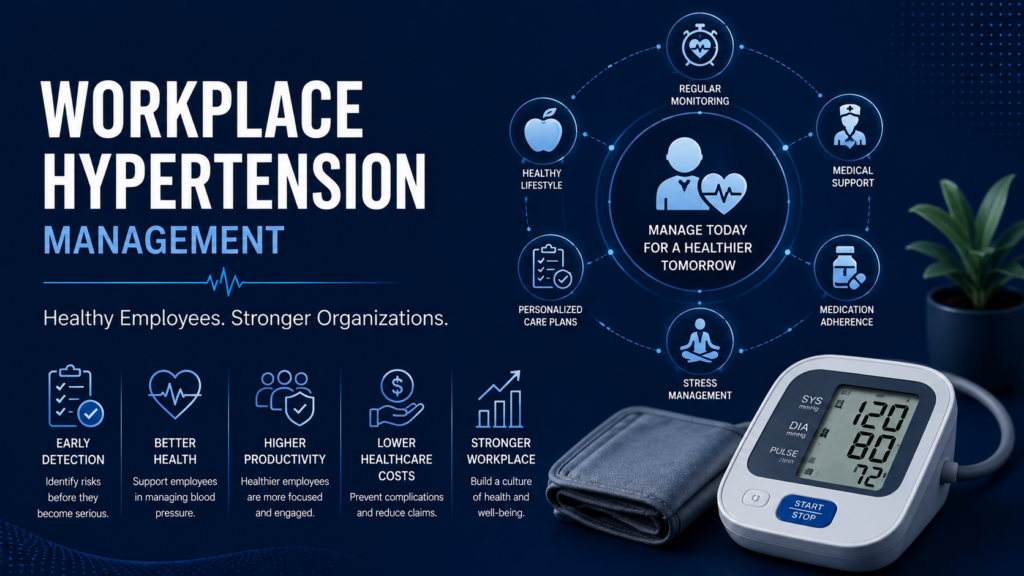
Wearable Blood Pressure Monitoring
Wearable and connected blood pressure technologies continue to evolve, but employers should distinguish between consumer devices and clinically validated blood pressure monitors. Programs should prioritize validated measurement devices and appropriate clinical oversight when blood pressure data is used for health management.
AI-Driven Risk Prediction
AI tools may help analyze health and benefits data to identify population-level risk patterns and support targeted outreach. Any employer use of AI involving health, claims, pharmacy, or biometric information should include appropriate privacy, security, nondiscrimination, and human-review safeguards.
Team-Based Care Models
The 2025 AHA/ACC high blood pressure guideline emphasizes multidisciplinary team-based care. Depending on the clinical model and applicable scope-of-practice rules, teams may include physicians, pharmacists, nurses, nurse practitioners, physician assistants, dietitians, community health workers, and other healthcare professionals.
Integration With GLP-1 and Cardiometabolic Programs
Hypertension frequently co-occurs with obesity, diabetes, and dyslipidemia. Some corporate wellness programs are increasingly adopting integrated cardiometabolic management approaches – addressing all four risk factors together rather than in separate siloed programs. GLP-1–based therapies are increasingly used in the management of obesity and diabetes, and some agents have demonstrated cardiovascular benefits in specific patient populations. Employers should evaluate these therapies as part of a broader cardiometabolic strategy rather than treating them as a standalone hypertension intervention.
Digital Therapeutics for Stress and Blood Pressure
Digital health interventions, including behavioral support, biofeedback, and remote monitoring, are being studied as complementary approaches to blood pressure management. Their effectiveness depends on the specific intervention and evidence supporting its use. Digital health tools, including remote monitoring, behavioral interventions, and connected devices, may complement lifestyle and pharmacological treatment when appropriately integrated into clinical care. Their use should be guided by the evidence supporting the specific technology and intervention.
Conclusion
Hypertension is a highly prevalent and modifiable cardiovascular risk factor that can create significant health, healthcare, and productivity challenges for employers and employees. Yet many people with high blood pressure remain unaware of their condition or do not have it adequately controlled.
The case for workplace hypertension management rests on three considerations: the clinical value of earlier detection and sustained blood pressure control; the potential financial impact of preventable healthcare and productivity costs; and the opportunity to make evidence-based health support more accessible to employees.
An effective hypertension management program does not necessarily require an on-site clinical facility. It does require appropriate screening, risk stratification, clinical support, lifestyle interventions, medication support, monitoring, and clear referral pathways. It requires screening, stratification, lifestyle coaching, medication support, telehealth access, a supportive physical environment, and a commitment to treating employee health as a business priority.
Employers that build evidence-based hypertension programs can support earlier detection, better blood pressure control, and healthier workforce outcomes while gaining better visibility into the health needs of their employee population.
Frequently Asked Questions (FAQs)
Hypertension management in the workplace refers to employer-sponsored programs that help employees prevent, detect, and control high blood pressure. These programs typically include blood pressure screening, lifestyle coaching, medication adherence support, telehealth access, and a supportive work environment designed to reduce cardiovascular risk.
Hypertension can affect employers through healthcare utilization, absenteeism, presenteeism, and disability-related costs. Workplace programs can support earlier detection and better blood pressure control, although the financial impact varies by workforce and program design. Employers should evaluate outcomes using their own claims, productivity, and health data.
Hypertension is common, and many people with the condition do not have it adequately controlled. Workplace screening can help identify employees with elevated blood pressure, but an elevated reading should be appropriately confirmed and evaluated through clinical care. The USPSTF recommends confirming elevated office measurements outside the clinical setting before starting treatment.