

U.S. healthcare spending continues to rise, putting pressure on employers and employees alike. Employer health costs are also expected to increase significantly, making proactive approaches to prevention and cost management increasingly important.
Employers are bearing a significant share of that burden. Employer healthcare costs have continued to rise, with the Business Group on Health projecting an approximately 8% healthcare cost increase for 2025. The 2026 survey later projected a median 9% increase for 2026, highlighting the growing pressure on employer health budgets.
A significant share of healthcare spending occurs after health problems have already developed, including emergency care, hospitalizations, specialist treatment, and other high-cost interventions.
That is the core argument for preventive healthcare programs for employees: stop paying for conditions after they become expensive. Intervene before they do.
What Are Preventive Healthcare Programs for Employees?
Preventive healthcare programs for employees are structured, employer-sponsored initiatives that help workers detect, manage, and avoid health conditions before they progress into high-cost events. They shift the health benefits model from reactive treatment to proactive care.
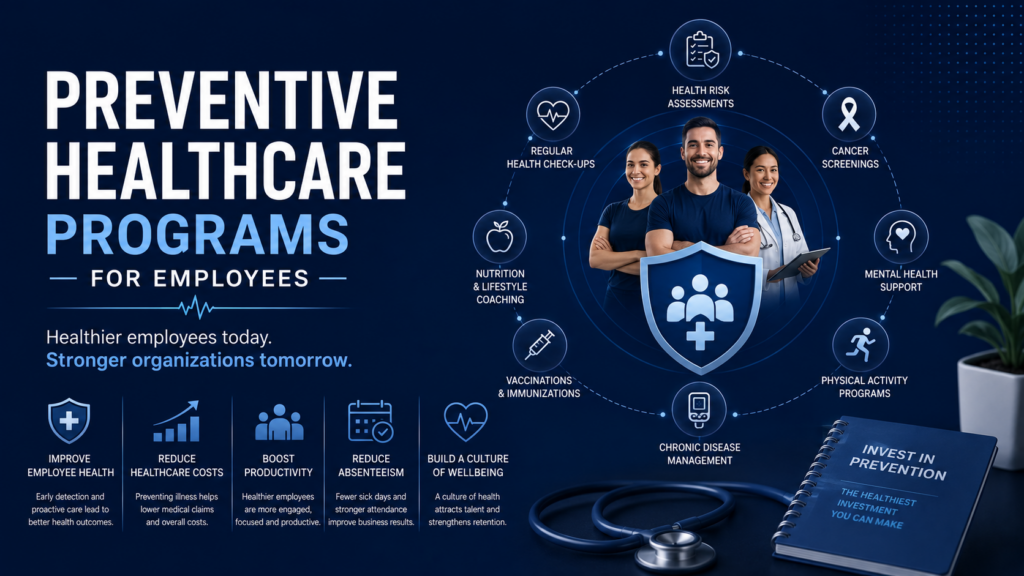
These programs span a wide range of services and activities:
- Annual physical exams and wellness check-ups
- Biometric screenings (blood pressure, cholesterol, glucose, BMI)
- Cancer screenings (colorectal, breast, cervical)
- Cardiovascular risk assessments
- Diabetes and prediabetes screenings
- Mental health screenings and access to counseling
- Immunizations and vaccinations
- Lifestyle coaching for nutrition, physical activity, and tobacco cessation
- Stress management and resilience programs
- Musculoskeletal (MSK) prevention and physical therapy access
Preventive healthcare is not one program. It is a comprehensive strategy – built into the benefits structure, delivered through multiple channels, and designed to reach employees before illness advances.
The Business Case: Why Prevention Pays
The financial argument for preventive healthcare programs for employees is strong and growing.
A FitOn Health analysis based on research from Havarti Risk found that preventive care and employee wellbeing initiatives generated up to a 3.6x return on investment for employers. Engaged employees in prevention programs deliver an average of $359 in healthcare and productivity savings per employee per year. For a company with 1,200 engaged employees, that translates to $433,228 in annual combined savings.
A separate study found average cost savings of approximately $1,224 per participant and reported a return of $4.90 for every dollar invested.
Advanced primary care models deliver even higher long-term returns. Indiana employers using a network-based advanced primary care model achieved 1.2x ROI in year one and up to 3.7x by year five, according to Marathon Health’s claims-based ROI study covering over 3 million medical claim records.
Worksite health centers – employer-sponsored on-site or near-site clinics – show annual cost savings ranging from $35,000 to $2.1 million per employer, with ROI ranging from $1.09 to $15.88 per dollar invested, according to a study evaluating 10 prior research papers.
MD Anderson Cancer Center provides a notable example of the potential impact of a prevention-focused employee wellness program. A focused employee wellness program emphasizing preventive care reduced lost workdays by 80% over six years, producing $1.5 million in cost savings and a 50% decline in workers’ compensation insurance premiums.
Systematic review evidence suggests that workplace prevention interventions can produce positive financial returns, although outcomes vary by program design, population, engagement, and evaluation period.
Healthcare spending has surged 188% over the last 20 years, while wages have increased just 84% (Milliman Medical Index, 2025). Every year of reactive care widens this gap. Preventive healthcare programs for employees are an important strategy for addressing rising healthcare costs while improving access to early and proactive care.
Why Employees Are Skipping Preventive Care – and What That Costs You
Cost remains a major barrier to care. KFF analysis found that about 17% of adults reported delaying or not getting healthcare because of cost in 2024.
Employees avoid preventive care for several reasons:
- Cost: High deductibles and co-pays deter early visits.
- Access: Limited appointment availability and geographic barriers.
- Time: Employees cannot easily take time off for routine check-ups.
- Awareness: Many don’t know what screenings they need or when.
- Fear: Reluctance to receive a diagnosis delays care until a crisis.
The consequences are predictable. Delayed preventive healthcare increases the risk of negative health outcomes. Chronic conditions that could have been managed early become expensive and complex. Cancer detected late costs far more to treat than cancer detected early. Early identification and management of diabetes can help reduce the risk of costly complications.
Employers that remove these barriers can make preventive care easier to access and may benefit from earlier identification and management of health risks.
Types of Preventive Healthcare Programs for Employees
What types of preventive healthcare programs can make the biggest difference in employee health and organizational performance? From health screenings and vaccination drives to wellness coaching and chronic disease prevention initiatives, employers can implement a range of programs that reduce health risks, improve wellbeing, and lower long-term healthcare costs.
1. Biometric Screening Programs
Biometric screenings are the entry point of most corporate wellness programs. They measure blood pressure, cholesterol, blood glucose, BMI, and other key health indicators to identify employees at risk before symptoms appear.
Annual screenings create a health baseline for each employee. Trend analysis across a workforce helps employers identify which conditions are driving their highest costs and design interventions accordingly. Early detection can help employees address health risks sooner and give employers an opportunity to connect them with appropriate preventive or clinical support.
2. Annual Physical and Preventive Visit Coverage
Under the Affordable Care Act, many health plans must cover certain recommended preventive services without cost-sharing when provided by an in-network provider, subject to applicable rules and exemptions. These include:
- Blood pressure screenings (adults 18+)
- Cholesterol testing for high-risk groups
- Colorectal cancer screening (adults 45–75)
- Type 2 diabetes screening (adults 40–70 who are overweight or obese)
- Depression screening
- Breast cancer screening
- Alcohol and tobacco use counseling
- Immunizations for flu, COVID-19, and other conditions
In October 2024, IRS Notice 2024-75 expanded the preventive-care safe harbor for HSA-eligible high-deductible health plans to include certain over-the-counter contraceptives, clarify coverage of continuous glucose monitors for people with diabetes, and expand the treatment of certain breast cancer screenings and insulin products as preventive care.
3. Cancer Screening Programs
Cancer and musculoskeletal conditions are among the major health conditions driving employer healthcare costs, while cardiovascular disease and other chronic conditions also contribute substantially to spending.
Comprehensive cancer screening programs – covering colorectal, breast, cervical, lung, and prostate screening – are becoming standard components of corporate wellness programs. Some employers are introducing incentives for employees who complete their recommended age-appropriate screenings.
4. Mental Health and Behavioral Health Prevention
Depression and anxiety impose a substantial economic burden globally, including significant productivity losses. Employees with untreated mental health conditions are more likely to miss work, underperform, and generate higher long-term claims.
Mental health preventive healthcare includes early screening through depression and anxiety assessments, access to Employee Assistance Programs (EAPs), digital mental health tools, stress management resources, and manager training on psychological safety.
Prevention here means catching mental health deterioration before it requires intensive clinical intervention. Integrated mental and physical health programs produce compounding benefits: employees whose mental health is supported also show better adherence to chronic disease management protocols.
5. Lifestyle and Chronic Disease Prevention Programs
Six in 10 U.S. adults have at least one chronic disease, making prevention and early management important components of employee health strategies. Many of these conditions – diabetes, heart disease, obesity, and hypertension – are directly linked to lifestyle factors that structured programs can address.
Employee wellness programs with lifestyle intervention components address:
- Nutrition counseling and DASH/heart-healthy diet guidance
- Physical activity programs and subsidized gym memberships
- Tobacco cessation support
- Alcohol reduction programs
- Weight management coaching
- Sleep health education
The National Diabetes Prevention Program (National DPP) – a CDC-recognized lifestyle change program – reduces the risk of developing Type 2 diabetes by 58% in high-risk individuals. Employers that offer it as a covered benefit can provide employees with access to an evidence-based approach to type 2 diabetes prevention.
6. Musculoskeletal Prevention and Physical Therapy Access
MSK conditions – including back pain, joint disorders, and repetitive strain injuries – are major contributors to absenteeism, disability claims, and presenteeism in the U.S. workforce. Early intervention through physical therapy, ergonomic support, and movement-based programs can help employees manage these conditions and stay active at work.
Digital physical therapy platforms, ergonomic assessments, and on-site movement programs are increasingly integrated into employee health programs. Sword Health’s 2024 analysis reported up to 4.4x ROI for its MSK care approach, illustrating the potential financial value of early intervention.
7. Telehealth and Advanced Primary Care
Cost remains a significant barrier to healthcare access, with KFF reporting that 17% of U.S. adults delayed or did not get healthcare because of cost in 2024. Telehealth and employer-sponsored advanced primary care remove the financial and logistical barriers that cause employees to delay routine care.
Same-day or next-day access to primary care – via on-site clinics, near-site health centers, or virtual platforms – can make preventive and routine care easier to access and use. Employees who use care guides and health navigation tools spend less on downstream costs: one study found employees using care guides experienced a $33.83 reduction in monthly healthcare spending in the six months following initial engagement.
8. Immunization and Vaccination Programs
Flu, COVID-19, and other vaccine-preventable illnesses cause significant workforce disruption every year. On-site vaccination clinics can reduce scheduling barriers and make it easier for employees to access recommended vaccines, potentially reducing illness-related disruption and absenteeism.
Benefits of Preventive Healthcare Programs for Employees
Preventive healthcare programs empower employees to stay healthier through early detection, regular screenings, and proactive wellness initiatives, resulting in lower healthcare costs, improved productivity, reduced absenteeism, and enhanced overall wellbeing.
| Benefit Area | Employer Impact |
|---|---|
| Reduced Absenteeism | Hypertension costs $72–$330/employee/year in absenteeism — managed programs reduce this substantially |
| Lower Healthcare Claims | Preventing one stroke or cardiac event avoids $50,000–$200,000+ in acute care costs |
| Presenteeism Improvement | Better blood pressure control reduces cognitive fatigue and on-the-job performance losses |
| Reduced Disability Costs | Controlled hypertension lowers short-term and long-term disability claim rates |
| Fewer Emergency Events | Workplace-based management reduced systolic BP by 7.83 mm Hg over 10 years (Kailuan Study, 2024) |
| Improved Employee Retention | Employees in supportive health environments report higher job satisfaction and lower turnover intent |
| GLP-1 and Comorbidity Management | Hypertension frequently co-occurs with obesity and diabetes; integrated programs address all three |
| Mental Health Synergy | Blood pressure programs paired with stress management produce compounding benefits |
How to Build an Effective Preventive Healthcare Program
“The best healthcare strategy isn’t treating disease – it’s preventing it before it begins.”
An effective preventive healthcare program combines proactive health screenings, personalized wellness initiatives, and continuous employee engagement to prevent illness and foster a healthier workforce.
Step 1 – Analyze Your Claims Data
Start with the data you already have. Identify which conditions are driving the highest costs, which departments have the highest absenteeism, and where preventive utilization rates are lowest. This informs both program design and vendor selection.
Step 2 – Map Existing Benefits
Audit what your current health plan covers for preventive services. Many employers underutilize ACA-mandated preventive benefits because employees don’t know they exist. Closing this awareness gap can be a relatively simple and cost-effective way to improve preventive care utilization.
Step 3 – Design for Access
Remove the barriers that cause employees to skip preventive care. This means zero-cost screenings, telehealth access for routine visits, flexible scheduling, on-site clinics where feasible, and multilingual communications for diverse workforces.
Step 4 – Stratify Your Population
Not all employees carry the same health risk. Use biometric screening data and HRAs to identify high-risk employees who need more intensive engagement. General workplace wellness program initiatives support the broad workforce. Targeted disease prevention and management programs can provide more intensive support to employees with greater health risks or healthcare needs.
Step 5 – Choose Vendors Strategically
Business Group on Health reports that employers are placing greater emphasis on vendor accountability and measurable value as healthcare costs rise. Evaluate vendors on measurable clinical outcomes, engagement rates, long-term ROI data, and integration capability with your existing health plan.
Step 6 – Incentivize Participation
Participation-based incentives can encourage employees to complete screenings, attend wellness sessions, or schedule preventive visits, while avoiding some of the complexity associated with incentives tied directly to health outcomes. These programs can also support recruitment and retention by strengthening the overall employee benefits offering.
Step 7 – Communicate Consistently
Many employees don’t use preventive benefits because they don’t know what’s available or how to access them. Use multiple channels – email, manager briefings, benefits portals, on-site health fairs, and telehealth platform notifications – to communicate program offerings year-round. Clear, consistent communication is essential because employees cannot use benefits they do not know about or understand.
Step 8 – Measure and Iterate
Track screening completion rates, utilization of preventive services, healthcare claims trends, absenteeism data, and program ROI annually. Use this data to refine design, replace underperforming vendors, and build internal investment support.
The Workforce Equity Dimension
Preventive healthcare utilization is not equal across the workforce. Employees in lower-wage roles, remote locations, and underserved communities may face greater barriers to accessing preventive care.
One in four adults says cost has caused them to skip care. This burden falls disproportionately on employees with lower incomes and those without consistent access to primary care.
Employers committed to health equity must design preventive healthcare programs for employees that specifically address these disparities:
- Zero-cost screenings and vaccination programs for all employees, regardless of plan type
- Telehealth access for remote and shift workers
- Multilingual communications and culturally competent coaching
- On-site or near-site clinics in locations accessible to frontline workers
- Care navigator support to help employees understand and use their benefits
Employee health programs that fail to reach employees with greater health risks may miss an important opportunity to improve health outcomes and manage healthcare costs. Equitable access can improve participation while helping employers address health risks across the workforce.
Emerging Trends in Preventive Healthcare Programs
Preventive healthcare programs are rapidly evolving through AI-driven risk assessments, personalized wellness strategies, digital health technologies, and data-driven interventions that help organizations prevent illness, improve employee wellbeing, and reduce long-term healthcare costs.
Whole-Person Care as an ROI Driver
Whole-person care, which integrates physical, mental, and social health, is becoming an increasingly important focus in employer health strategies. Employers are moving away from fragmented point solutions toward integrated programs that address the whole employee.
AI-Powered Predictive Prevention
Artificial intelligence tools are increasingly being explored to identify patterns associated with higher health risks and support proactive outreach. By analyzing claims data, biometric trends, and health risk assessment patterns, AI platforms can help identify employees who may benefit from proactive outreach and earlier intervention.
Expanded Screening Coverage
Comprehensive cancer screening programs, cardiovascular risk assessments, diabetes screenings, and MSK evaluations are increasingly being incorporated into corporate wellness strategies. Some employers are introducing incentive structures to reward screening completion.
Digital Therapeutics and Personalized Health Platforms
Personalized digital health platforms offer preventive care reminders, chronic disease management tools, telehealth consultations, and streamlined benefits navigation in a single interface. These platforms can support preventive care engagement by making information, reminders, and healthcare services easier to access.
Mental and Physical Health Integration
Employers are ending the artificial separation of mental and physical health programs. Integrated platforms that address emotional wellbeing, stress, sleep, nutrition, and physical activity can provide more comprehensive support than isolated interventions.
Conclusion
Healthcare costs are not going to fall on their own. Healthcare costs continue to put pressure on employers, making prevention, early intervention, and effective benefits utilization increasingly important.
Preventive healthcare programs for employees are an evidence-based strategy for improving access to early care, supporting healthier behaviors, and potentially reducing avoidable healthcare costs. They can support earlier detection, reduce the risk of avoidable complications, improve employee wellbeing, and strengthen the overall value of an employer’s health benefits strategy.
The financial case can be compelling. Studies and employer case analyses have reported positive returns, including 3.6x ROI in one preventive-care analysis, up to $15.88 returned per dollar invested in worksite health-center research, and substantial savings in individual employer case studies. These findings illustrate the potential financial value of well-designed prevention programs.
Preventive healthcare is not a wellness perk. It is a workforce strategy. The employers who treat it as one – building structured, evidence-based, equity-conscious programs that reach every employee – will carry a healthier, more productive, and more cost-effective workforce into the next decade.
The ones who keep paying reactively will keep paying more.
Frequently Asked Questions (FAQs)
Preventive healthcare is increasingly a competitive differentiator in talent markets. Employee health benefits can influence employer choice and retention, making preventive care a potential component of a broader employee value proposition. Organizations that invest in employee health and wellbeing may strengthen engagement and retention, particularly when preventive benefits are combined with broader workplace support and a positive employee experience.
Leading employee wellness programs and corporate wellness programs include: blood pressure and cholesterol screenings; blood glucose and HbA1c testing; BMI assessments; colorectal, breast, and cervical cancer screenings; cardiovascular risk assessments; depression and anxiety screenings; and musculoskeletal risk evaluations. Many health plans must cover certain recommended preventive services without cost-sharing when provided by an in-network provider, although coverage requirements and exemptions vary by plan type. IRS guidance issued in October 2024 also expanded the preventive-care safe harbor for certain HSA-eligible high-deductible health plans, including specific coverage related to insulin, glucose monitoring, contraceptives, and breast cancer screening.
The most effective strategies combine access improvements with active communication. Removing cost barriers – covering screenings at zero cost, providing telehealth – addresses the financial deterrents. Offering flexible scheduling and on-site or near-site services removes logistical barriers. Participation-based incentives (rewards for completing a screening or annual physical) increase engagement without the legal complexity of outcome-based models. Consistent multi-channel communication – email, manager briefings, benefits fairs, digital platforms – ensures employees know what’s available and how to use it.